
Affiliate disclosure: purchases made throught the link may pay the affiliate a commision at no extra cost to you. Thanks for helping keeping the site running. Informational in nature only, not financial advice.
Surprising fact: nearly 70% of U.S. retail buyers prefer small, easy-to-sell pieces when they first start a precious metals plan.
This short guide will define what choosing between the two physical forms means for an American investor. It explains how both track spot price but differ on premiums, liquidity, and storage.
Short version: smaller units give flexibility and quick resale. Larger units often lower cost per ounce for bigger allocations.
We will preview the real decision factors you care about: total cost per ounce, ease of resale, flexibility of unit size, storage and security, verification, and tax quirks across states.
Most bullion buyers focus on metal content. Design or collectible value matters only if you are after numismatic pieces. This section promises a practical way to compare all-in pricing and a goal-based tip for starter stacks versus $10,000+ allocations.
Key Takeaways
- Both physical forms track spot price; choice depends on budget and goals.
- Smaller pieces offer better liquidity for everyday sellers.
- Larger pieces often cut the premium per ounce for big purchases.
- Factor in storage, dealer buybacks, and state sales tax rules.
- Focus on metal content unless buying collectibles intentionally.
- Later sections include a checklist for where to buy and dealer questions.
Silver bars vs. silver coins: the quick difference that matters to investors
“Think in terms of resale and metal for your money.” That sums up the trade-off most U.S. investors face when choosing physical bullion.
Bullion value, design, and recognition in the U.S. market
Coins are often government-minted and carry clear weight and purity marks. That recognition makes them easier to resell at local shops and national dealers.
Bars tend to be prized for pure content and can cost less per ounce as you move to larger sizes. Design rarely changes the metal’s actual value; it mainly affects demand and trust.
How the amount of metal and unit size change your options
A one-ounce coin gives flexibility for partial sales. Big bars concentrate the amount silver into fewer pieces, which helps scale but limits break-up options.
- Coins = easy resale and broad demand.
- Bars = lower premium per ounce at scale, less divisibility.
Next, we’ll compare premiums, liquidity, divisibility, storage, verification, and U.S. tax considerations so you can match choice to your goals.
What silver coins are and why they’re popular with retail investors
Government-minted rounds give clear weight and purity marks that help speed transactions.


Government-minted trust signals
Many bullion products come from national mints and are .999 or .9999 fine. That guarantee of weight and purity reduces buyer hesitation and makes verification simple for dealers.
Common sizes that make building positions easy
Standard one-ounce pieces are the backbone for gradual purchases and dollar-cost averaging. Fractional sizes can be as small as 1/10 oz, which helps new investors add metal in small steps.
Liquidity and market demand for recognized issues
“Recognized government issues often fetch faster quotes and smoother buybacks.”
Widely known examples include the American Silver Eagle and the Canadian Maple Leaf. Their recognition creates more potential buyers, higher demand, and better liquidity at local dealers.
- Face value exists but market value tracks metal content.
- Premiums can be higher, but flexibility and resale ease often justify the cost.
If you plan to buy silver in manageable steps, these recognized rounds usually feel simpler and more forgiving.
Our Top Company Pick for 2026

Minimum Investment with Augusta Precious Metals is $50,000.
See Our Full 2026 Company ComparisonWhat silver bars are and when they make the most sense
Long-term accumulators often favor plain ingots because they emphasize content over design.
Cast or minted — what to look for
Silver bars are simple bullion pieces that focus on metal content. That simplicity cuts manufacturing steps and usually lowers cost.
Some pieces are cast (a poured look). Others are minted and have crisp lines. The visual difference hints at production method, not metal quality.
Stamps, serials, and practical details
Expect clear markings for weight (for example, 10 oz), purity (.999 or .9999), and the refiner or mint mark.
Large ingots may include a serial number for traceability. These stamps speed dealer checks and help verify authenticity.
- Main advantage: at scale, lower premiums per ounce mean you get more metal for the same budget.
- Note the nuance: small 1 oz pieces can carry similar premiums to government rounds.
- Best fit: investors building a large position or prioritizing cost efficiency with fewer, higher-value units.
Buying silver bars vs coins: premiums, spot price, and cost per ounce
The headline price—spot—only tells part of the story; premiums decide what you actually pay per ounce.
Top precious metals companies of 2026
A side-by-side comparison of leading precious metals providers for physical metals and IRA rollovers.
Why many rounds carry higher premiums
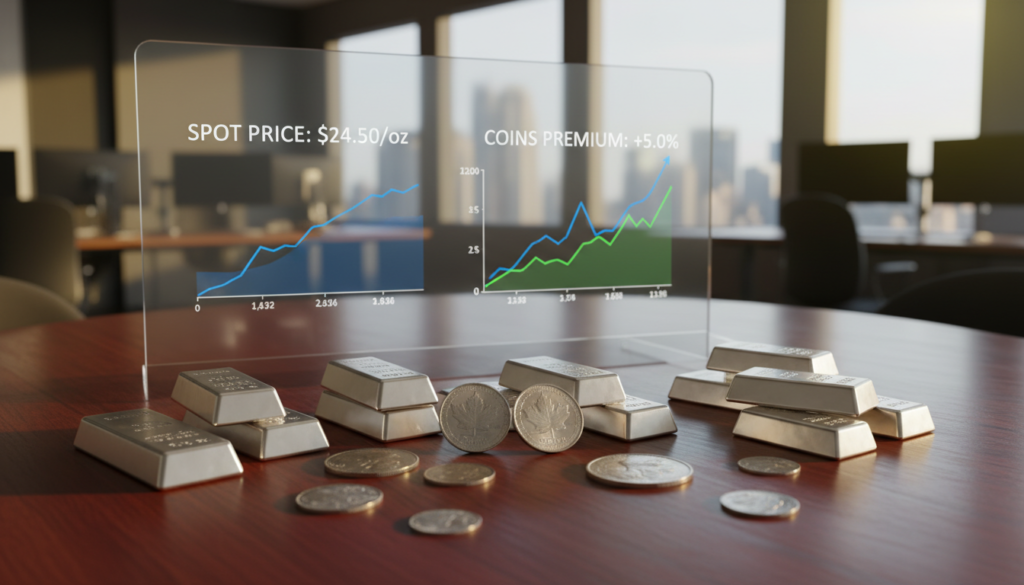
The spot price is the metal market quote. Physical pieces trade at spot plus a premium that covers fabrication, distribution, and dealer margin.
Recognition and minting drive higher premiums. Government-minted products have detailed designs and strong demand, so dealers charge more for quick resale value.
When ingots deliver lower premiums per ounce (and when they don’t)
At 10 oz, kilo, or larger sizes the fabrication cost spreads over many ounces. That usually yields lower premiums and better value per ounce.
Small ingots can still carry meaningful premiums, so don’t assume all larger-format pieces are cheaper.
Simple price math you can use
Use this formula to compare total cost:
- (spot price × ounces) + premium = total cost
- Then divide total cost by ounces for true $/oz
| Product | Spot | Premium | Total | $ / oz |
|---|---|---|---|---|
| 1 oz coin | $25.00 | $8.00 | $33.00 | $33.00 |
| 10 oz ingot | $250.00 | $30.00 | $280.00 | $28.00 |
| 1 kg ingot | $805.00 | $45.00 | $850.00 | $27.34 |
Premium drag is the extra cost that slows your break-even point. High premiums matter most for short holds.
When checking dealer pages, compare the same weight across products and include shipping or insurance in your math. Next: which option is easier to sell later?
Liquidity and selling later: which is easier to buy, sell, and trade?
Liquidity affects how fast you can turn metal into cash without losing much value. Think of it as how quickly and fairly you can sell a piece when you need money.

Why many small government coin pieces move faster
Smaller, recognized pieces often attract steady local demand. Dealers and shops commonly buy back one-ounce coin units, so you can sell a few and keep the rest.
That makes partial sales easier and lowers the chance you must accept a steep discount for speed.
How buyer pools change as units grow
Large bars still hold value, but the buyer pool narrows. Fewer retail buyers can afford big chunks, so transactions often route through professional dealers or specialized traders.
Practical note: spreads — the gap between buy and sell quotes — can widen when local demand is thin. Always ask how a dealer handles high-value pieces and what verification they require.
“Plan your exit: would you sell next month or in ten years?”
- Define liquidity before you buy.
- Smaller units often preserve price in fast sales.
- Big pieces may save on cost per ounce but can add selling friction.
Divisibility and flexibility: building a portfolio one purchase at a time
Building a balanced portfolio often depends on how easily you can buy or sell parts of your holding.
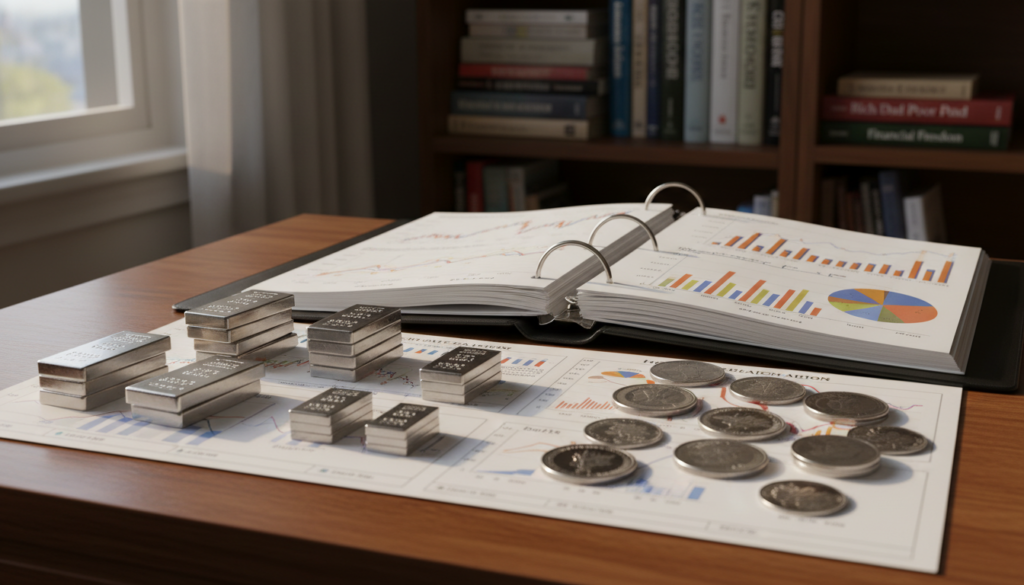
Fractional options compared with fewer, larger units
Fractional coins and common one-ounce pieces let an investor add small, regular amounts. You can stick to a monthly plan without waiting to save for a single big unit.
Fewer, larger bars concentrate metal into big chunks. That can lower cost per ounce but makes it harder to trim positions in precise increments.
How divisibility helps with rebalancing and taking profits
When a rising market pushes metal above your target allocation, small units let you sell slices and lock in gains.
Large units often force an all-or-nothing sale or a sale to a dealer at wider spreads. For many investors, the simplest way to stay disciplined is to match unit sizes to a monthly budget.
- Rule of thumb: coins for granular control; bars for efficient scale.
- Use fractional sizes to rebalance gradually and manage taxes and cash flow.
Storage and security in the United States: home, bank box, or vault
Storage choice changes your risk profile and ease of access more than many investors expect. Pick a path that matches your total holdings, unit size, and comfort with access limits.
Coins: compact storage and spreading risk across many units
At-home safes work well for small collections. Tubes and boxes fit neatly and let you split holdings across locations.
Using multiple spots reduces the chance of losing large value in one theft.
Bars: efficient stacking, but higher-value pieces can raise the stakes
Stacking makes bars space-efficient. One large piece, however, can represent a lot of money and increase loss risk.
If you hold few, high-value units, professional storage becomes more attractive.
When professional vault storage and insurance become worth it
Bank safe deposit boxes add security but cut immediate access. Home policies often cap coverage for precious metals.
Insured vaults give full protection and reporting, though fees reduce net returns and access speed.
“Match your storage plan to how much value you hold and how fast you might need access.”
- Home safe: low cost, quick access, limited insurance.
- Bank box: secure, moderate cost, restricted hours.
- Professional vault: insured, audit trails, extra fees and delayed access.
Decision tip: the more total metal value and the fewer units you own, the more you should favor insured, professional storage.
Purity, verification, and counterfeit risk: what’s easiest to authenticate?
Authenticating precious metal products starts with simple checks and, for big-ticket pieces, can require lab tools.
Our Top Company Pick for 2026

Minimum Investment with Augusta Precious Metals is $50,000.
See Our Full 2026 Company ComparisonCoins: clear mint cues and quick checks
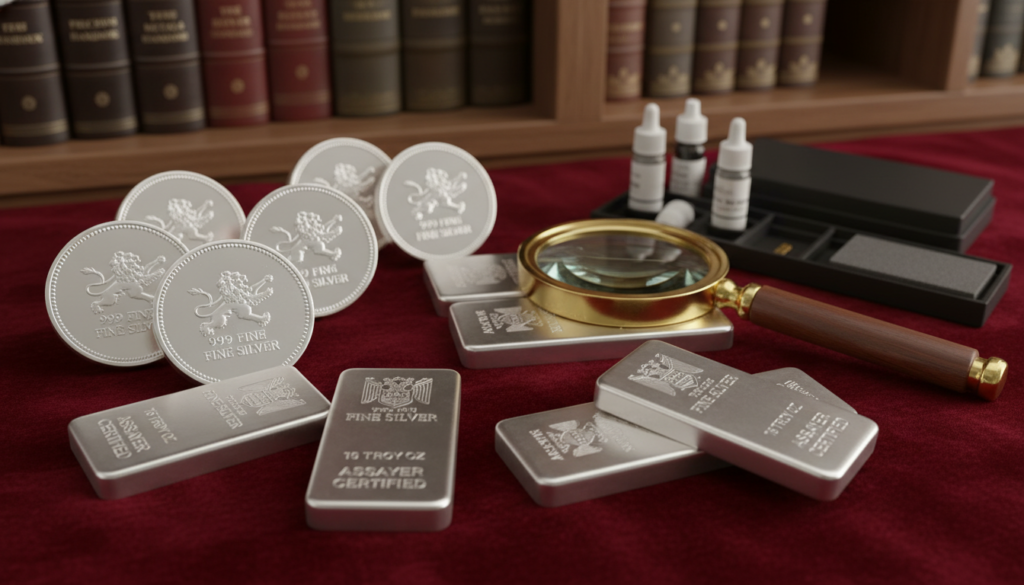
Government-minted coins carry recognizable designs and precise weight and diameter specs. That makes a visual review and a quick weight or caliper test effective for most small transactions.
Many dealers accept common issues without extra testing because the market knows their dimensions and security features.
Why large bars may need advanced testing
Stamped weight, purity, and serials help, but large ingots can hide shims or plating. For high-value pieces, professional tools like XRF or ultrasound confirm internal content and avoid costly mistakes.
How to reduce risk when you buy silver from dealers
Verification means confirming genuine purity and metal content so you can resell confidently.
“Buy from known dealers, keep paperwork, and prefer sealed products when available.”
- Buy from established, trackable sellers.
- Keep receipts and photos of markings.
- Inspect weight and packaging on arrival.
- Ask about third-party testing for high-value items.
Ultimately, the easier a product is to authenticate, the smoother your exit will be in the market. Prioritize reputable sourcing over chasing low prices when volatility rises.
Taxes and account considerations for U.S. investors
Tax rules and account limits can change the true cost of holding physical metals in the U.S. State laws, federal rules, and custody choices all affect final outlays and reporting.
Sales tax realities vary by state when you buy silver
Sales tax treatment is not uniform. Some states exempt qualifying precious metals; others apply standard sales tax or require a minimum weight or purity for exemption.
Practical step: check your state rules or ask the dealer about sales tax before you place an order to avoid surprises on the final price.
Capital gains basics when selling precious metals
If you sell for more than your cost basis, you may owe capital gains tax. Keep receipts, shipping records, and invoice details to establish basis and holding period.
Note: metals can be treated differently than stocks for tax reporting, so don’t assume brokerage-style 1099s will arrive automatically.
Silver’s role in a self-directed precious metals IRA (eligibility focus)
IRA eligibility depends on product purity, accepted forms, and custodial storage rules. The IRS requires approved custody—home storage is not allowed for IRA-held items.
Tip: confirm purity standards and custodian policies before moving assets into a self-directed account.
“For big purchases or IRA moves, consult a tax professional to align tax, custody, and investment goals.”
- State sales tax can materially change purchase cost.
- Recordkeeping protects your tax position on capital gains.
- IRAs require approved products and third-party custody.
| Issue | What to check | Action |
|---|---|---|
| Sales tax | State rules, exemptions | Verify before checkout |
| Capital gains | Cost basis, holding period | Keep invoices and records |
| IRA eligibility | Purity & custody | Confirm custodian acceptance |
Choosing what to buy based on your goal, budget, and timeline
A sensible plan starts by matching your horizon, wallet size, and how you’ll access cash. That clarity makes it easier to pick the right form for your needs.
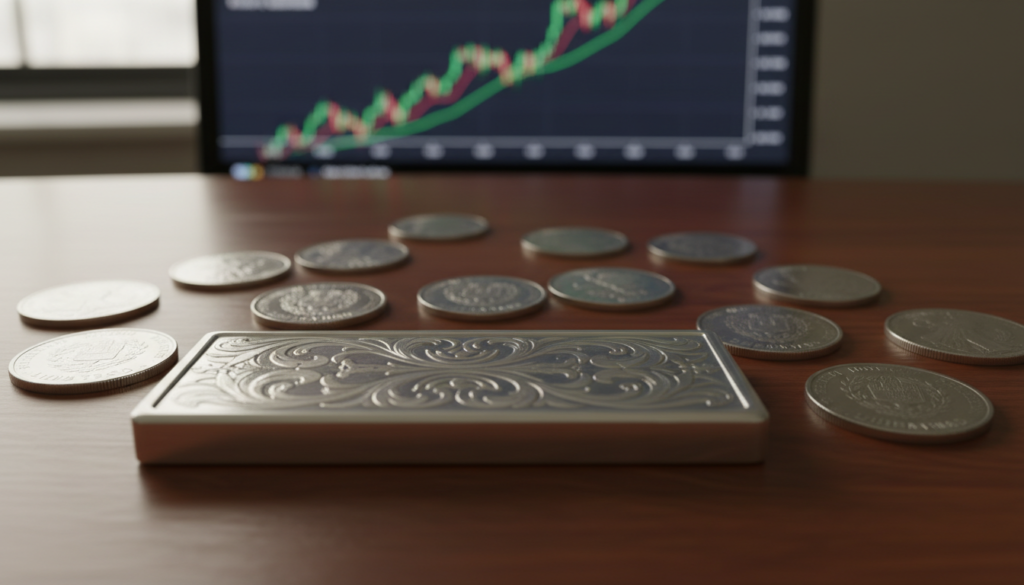
If you’re starting small: flexibility and market demand
For new investors, smaller, recognized rounds give flexibility. They suit regular purchases and let you sell a little without touching the rest.
Advantage: easy resale and steady demand when you need liquidity.
If you’re investing $10,000+: cost efficiency at scale
Large-format pieces cut costs through lower premiums per ounce. That helps you accumulate more metal for the same cash when you plan to hold long-term.
Expect fewer split-sale options, but better value if you keep a longer horizon.
If you want both: a hybrid approach to balance liquidity and premiums
Many experienced investors blend forms. Keep transactional liquidity in small recognized pieces and core holdings in larger, cost-efficient units.
Answer three questions to choose a mix:
- How often will I buy?
- How might I sell—piecemeal or all at once?
- Where will I store holdings and how secure must access be?
“There’s no universal best — only the best fit for your budget, timeline, and exit plan.”
| Profile | Best fit | Why |
|---|---|---|
| Starter / monthly saver | coins silver | Granular purchases, easy resale, steady demand |
| $10,000+ allocator | silver bars coins | Lower premiums, better value per ounce for long holds |
| Balanced investor | coins silver bars | Liquidity for needs + core cost efficiency |
Where to buy and what to check before you spend your money
Before you spend, prioritize dealers who show real-time quotes and transparent fees.
Trusted places to shop
U.S. investors commonly use established online bullion dealers and reputable local coin shops. Choose sellers with a clear track record, visible review history, and transparent pricing.
Product checklist
Verify purity (.999 or .9999) and confirm weight. Look for clear mint or refiner markings and serial numbers on large pieces.
Prefer widely recognized issues — they ease future buy sell transactions and tend to hold tighter spreads.
Key questions to ask a dealer
- What is your buyback policy and typical buy/sell spread?
- How do you set premiums and do prices update with spot in real time?
- Do you offer insured shipping and discreet delivery?
Delivery and final checks
On receipt, inspect packaging, weigh items, and photograph marks. Keep all receipts and paperwork.
Compare total cost — premiums, shipping, insurance, and payment fees — not just the headline price.
Action step: See our list of the best precious metals companies now
Conclusion
The smartest choice balances resale ease, per-ounce economics, and how you will store what you own. Coins tend to win on flexibility and local resale, while bars often win on cost efficiency when you scale up.
Use a clear framework: compare spot price + premiums, plan for liquidity needs, and match unit sizes to your exit plan. That math shows true cost and helps avoid surprises.
Remember risk management: verification and secure storage grow more important as total value rises. Start with recognizable pieces, then add larger units as you learn pricing and custody.
Ready to act? See our list of the best precious metals companies now