

Surprising fact: more than half of retail bullion purchases are made by first-time physical metal investors, and silver was trading near $32 per ounce in early April 2025.
This short guide shows why plain bullion can fit a balanced portfolio for U.S. investors who want a tangible asset alongside paper holdings. We’ll explain how recognizable brands, solid liquidity, and fair pricing shape what makes a good choice.
Expect a clear, no-jargon road map that compares bar types, common sizes, premiums vs. spot, and storage options without overwhelming detail. You’ll learn what to check—purity stamps, reputable mints, assay packaging—and why where you buy matters as much as which piece you pick.
Quick note: the real best pick depends on your goals: stacking as a hedge, building a position gradually, or aiming for the lowest cost per ounce.
Key Takeaways
- Physical bullion can diversify a portfolio and sit beside stocks and bonds.
- Look for well-known mints, clear purity marks, and good resale liquidity.
- Compare premiums and size options to match budget and goals.
- Verify authenticity and buy from trusted dealers or mint channels.
- Decide whether you prioritize lowest cost per ounce or ease of resale.
Why Silver Bars Make Sense for Long-Term Investors in Today’s Market
Many investors turn to physical metals when economic signals feel unstable. Precious metals act as a tangible store of value, separate from banks or any single financial system.
Silver as a tangible “store of value” during economic uncertainty
Silver is usually cheaper per ounce than gold, so it’s easier for a budget-minded investor to build a meaningful position over time. That accessibility makes silver a common choice when people want real, physical assets that are not tied to paper markets.
Why bars often beat coins on premiums for buy-and-hold
Bars typically carry lower premiums than coins. Coins need detailed designs, stricter minting, and often attract collector demand. That raises their cost beyond metal content.
| Format | Typical Premium | Why |
|---|---|---|
| 1 oz coin | ~19% | Design detail, minting cost, collector interest |
| 1 oz bar | ~7% | Simpler production, less collectible markup |
| Bulk/large sizes | Lower per-ounce | Economies of scale, lower fabrication costs |
Bottom line: many investors choose bars for efficiency. They give more metal per dollar, are easier to store, and come in sizes that match gradual accumulation plans.
Spot Price vs. Premiums: What You’re Really Paying Per Ounce
The market quote you see on a screen is only the starting point of what you pay per ounce. That live spot price moves every day as global buyers and sellers react to news, currency shifts, and macro flows.
Understanding market movement
Think of the spot as the baseline. When you buy, dealers add a premium. Your true entry is spot + premium, which sets the real cost per ounce.
Why premiums change
Premiums vary by brand, packaging, anti-counterfeit features, retail supply, and sudden spikes in demand. Smaller pieces often carry higher cost per ounce, while larger sizes lower that charge.
“Lower premiums shrink the move needed in spot price before you reach profit.”
| Factor | Effect on premium | Typical outcome |
|---|---|---|
| Brand reputation | Raises resale trust | Higher premium |
| Piece size | Economies of scale | Lower premium per ounce |
| Demand spike | Retail shortages | Premium jump |
Quick buyer checklist
- Compare total delivered price across dealers (including shipping).
- Check payment fees and authentication features.
- Favor reasonable premiums that do not sacrifice trust.
Best Silver Bars to Buy for Long Term Holding
What matters most is how fast a piece converts into cash and how confident a buyer feels about its origin.
What “best” means for holding
Use a three-part test: strong liquidity, clear recognizability, and hassle-free resale. Pieces that meet all three sell faster and often fetch closer to spot plus any premium.
Why reputable refiners trade more easily
Known mints and refiners carry trusted stamps, serials, and assay packaging. That trust reduces buyer friction and raises resale speed and value.
Purity matters — .999 vs .9999
Most IRAs accept .999 fine; that is the common investment baseline. .9999 offers extra purity but usually only adds value if buyers in your market pay a higher premium.
When paying higher premiums makes sense
Spend more when anti-counterfeit features, assay cards, or global brand recognition cut selling hassles. If you need the lowest cost per ounce, choose plain pieces. If you need fast liquidation and buyer trust, a slight extra cost can be worth it.
Minted vs. Poured Silver Bars: Which Holds Value Better Over Time?
How a piece is made — struck or cast — affects its appearance, market appeal, and often its premium. Minted pieces are struck with precise dies. That creates consistent sizing, crisp designs, and a smooth finish most dealers recognize quickly.
Poured or cast pieces come from molten metal poured into molds. They show more texture and individual character. Some collectors prize that uniqueness, while others prefer uniformity when assessing resale value.
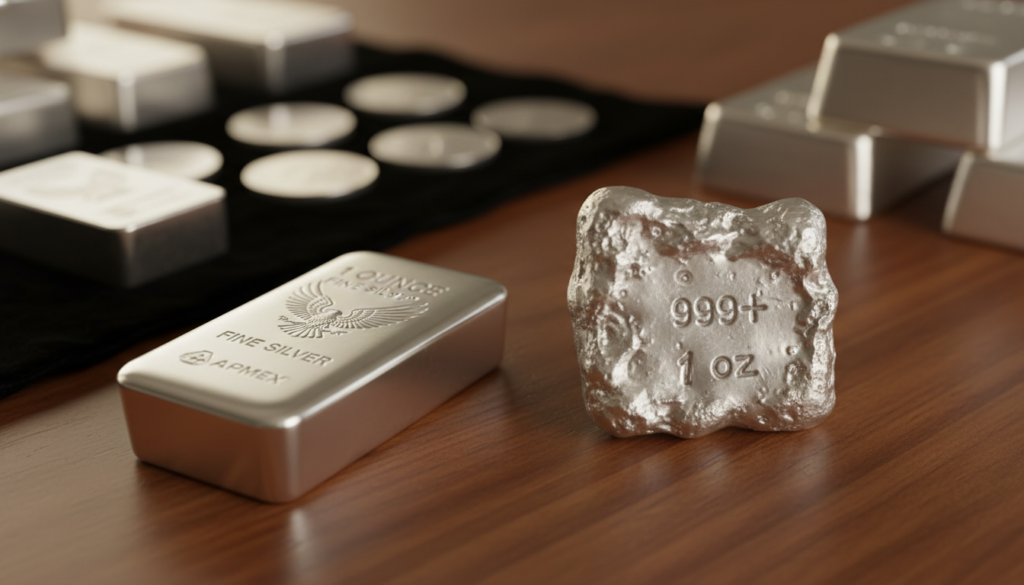
Quick comparison
| Feature | Minted (struck) | Poured (cast) |
|---|---|---|
| Finish | Uniform, polished | Rougher, textured |
| Buyer appeal | Broad reseller trust | Collector niche interest |
| Typical premium | Often lower per ounce | Can vary; sometimes higher |
| Authentication | Easy visually | May need provenance |
Practical takeaway
- Choose minted pieces for efficiency and easy resale.
- Consider poured pieces if you value unique designs or small-batch appeal.
- Always pick reputable bullion products with clear markings: weight, purity, and maker.
“Poured pieces can earn a premium when collector demand is strong, but minted items usually win on liquidity.”
Choosing the Right Silver Bar Sizes for Your Portfolio and Liquidity Needs
A simple mix of small and large pieces can balance immediate liquidity with lower per-ounce cost. Match purchases to how often you might sell and how much space you have for secure storage.
Smaller pieces for flexibility: 1 oz, 5 oz, 10 oz
1 oz, 5 oz, and 10 oz units ease gradual accumulation. They let you sell part of a position without moving your whole stake.
Smaller sizes attract a wider pool of buyers and usually trade faster in local and online markets.
Larger units for lower cost per ounce: kilo and 100 oz
Kilo and 100 oz options cut the premium you pay per ounce. That makes them efficient if you want to concentrate ounces.
But larger pieces often need a specialist buyer or a bigger sale size, which can slow liquidation.
How size affects storage, selling speed, and buyer pool
Storage is more compact with stacked kilo or 100 oz formats. Small pieces require more slots but give organizing and labeling ease.
Selling speed usually favors small units. Larger pieces offer cost efficiency but narrower buyer demand.
“Mix sizes so you can access cash quickly while still lowering your average cost.”
| Common size | Typical advantage | Typical buyer pool |
|---|---|---|
| 1 oz | High liquidity, easy partial sales | Retail buyers, local dealers |
| 5 oz / 10 oz | Balanced flexibility and efficiency | Retail and online buyers |
| Kilo | Lower premium per ounce, compact storage | Serious stackers, dealers |
| 100 oz | Lowest per-ounce cost, efficient accumulation | Bullion specialists, institutional buyers |
- Map sizes to your portfolio goals: small units for liquidity, larger ones for cost efficiency.
- Consider storage space and labeling when planning purchases.
- Blend units so you keep access to cash while minimizing overall premiums.
Top Sovereign and Government-Backed Options Worth Considering
Sovereign-issued ingots give many investors a clear mark of trust when marketplace questions arise.
Many long-term holders favor government-backed pieces because they carry perceived trust and broad recognition. That trust often makes resale conversations quicker and smoother when compared with lesser-known refiners.
Why national mint products matter
High recognition: People in the U.S. and abroad spot national stamps quickly. That ease of ID speeds sales and reduces buyer skepticism.
Consistent purity: The Royal Canadian Mint issues bars at .9999 purity. That standard reassures dealers and private buyers about metal content.
Security, design, and resale
RCM pieces often include unique serial numbers and serrated edges as anti-counterfeit features. Those details support authenticity checks and smooth the path at resale.
“Buy it once, worry less later” — many owners say this about recognized mint products.
| Feature | Benefit | Practical effect |
|---|---|---|
| Royal Canadian Mint | High brand trust | Faster resale, easy listings |
| Serial numbers | Traceable authenticity | Lower fraud risk |
| Serrated edges & maple design | Consistent appearance | Buyer recognition; simpler descriptions |
- The royal canadian mint and canadian mint names carry global recognition that many U.S. buyers value.
- Expect slightly higher premiums, but often better liquidity and fewer resale headaches.
Top Private Mint Silver Bars with High Trust and Strong Resale Demand
Private mints earn trust through consistent stamps, assay packaging, and years of dealer acceptance. That trust speeds resale and reduces buyer questions when you list bullion.
PAMP Suisse
Lady Fortuna designs, serial numbers, and micro-engravings give PAMP Suisse strong resale confidence. Their packaging is widely recognized by dealers and collectors.
Sunshine Minting
Sunshine Minting silver bars include the MintMark SI™ security feature and often carry competitive premiums across common sizes (1–100 oz).
Scottsdale Mint
Scottsdale offers stackable, interlocking pieces that save space in safes. Their .999 pieces are IRA-eligible and favored by stackers.
Asahi, Valcambi, Heraeus
Asahi provides global recognition with attractive pricing. Valcambi CombiBars break into smaller units for flexible selling. Heraeus delivers .9999 purity from an established German refinery.
| Refiner | Key feature | Practical edge |
|---|---|---|
| PAMP | Lady Fortuna, serials | Strong resale trust |
| Sunshine | MintMark SI™, low premiums | Value-oriented buyers |
| Valcambi | CombiBar break-apart | Flexible selling |
| Heraeus | .9999 purity | High assay confidence |
Choose based on priority: lowest premiums, storage efficiency, or easiest recognition at resale.
Vintage and Collectible Bars: Engelhard and Johnson Matthey for Long-Term Holders
Vintage ingots carry stories that can add collectible appeal beyond their melt price.
In bullion terms, “vintage” usually means discontinued lines, older hallmarks, and brands collectors chase. Engelhard production ended around 1980. Johnson Matthey pieces are no longer made. That rarity drives interest among niche buyers.
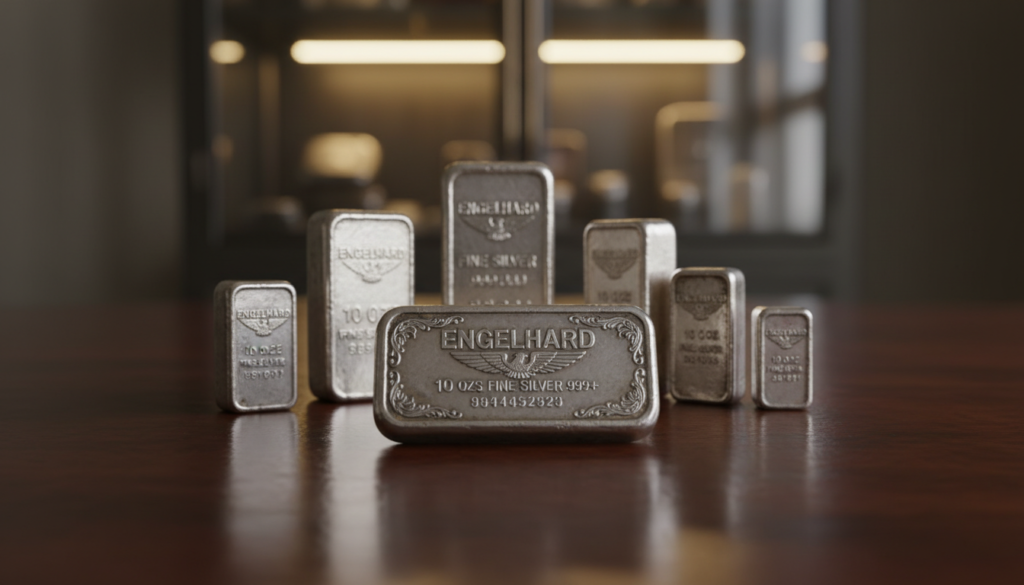
Why discontinued production can add collectible value
Scarcity and history can move a piece above its base metal worth. Collectors like named refineries, serials, and era-specific stamps. This demand raises resale prices in specialist markets.
How to evaluate the tradeoff
Expect to pay a higher upfront premium. You are buying a story and rarity, not just ounces. If your priority is stacking the most metal, modern pieces are usually cheaper per unit.
- Check markings: confirm maker, weight, and purity.
- Compare recent sales: review secondary-market prices.
- Decide your goal: investing in metals or collecting history.
| Factor | Vintage edge | Practical effect |
|---|---|---|
| Rarity | Often high | Possible premium above melt |
| Buyer pool | Niche | Slower but targeted sales |
| Upfront cost | Higher | Lower ounces per dollar |
“Vintage pieces can complement a stack if you enjoy history and accept premium risk.”
Authenticity and Anti-Counterfeit Features to Look For Before You Buy
Authenticity matters. A single fake can erase the savings you gained from a low purchase. Before you sign, learn a few quick checks that protect value and trust.
Key markings and security elements
Quality pieces show clear maker name or logo, weight, and a purity stamp. Many come with an assay certificate and a serial number linked to packaging.
Micro-engravings and proprietary features like MintMark SI™ deter counterfeits and raise buyer confidence.
Easy at-home screening
- Visual check: crisp edges, sharp lettering, match official photos.
- Magnet test: silver is not magnetic — a response is a red flag.
- Keep packaging intact; assay cards help resale.
Dealer verification methods
Trusted dealers may use XRF and other non-destructive testing to confirm metal content without harm. These tests verify bullion purity and support clear resale price discovery.
| Check | What it shows | Action |
|---|---|---|
| Serial + assay | Traceable origin | Prefer pieces with intact certificates |
| Micro-engraving | Anti-counterfeit detail | Compare under magnification |
| Magnet test | Basic authenticity flag | Fail = investigate further |
“At-home tests help, but professional checks give final assurance.”
Where to Buy Silver Bars in the United States Without Taking Unnecessary Risks
When you shop for physical bullion in the United States, the seller matters as much as the piece.
Why established precious metals dealers reduce fraud risk
Low-risk purchases show transparent pricing, clear return and shipping policies, and strong authentication practices.
Established dealers source from trusted channels, supply documentation, and use professional verification tools such as XRF or assay certificates.
Names like Westminster Mint and Blanchard are often cited because they publish buyback policies and shipping practices that cut fraud chances.
Online vs local buying: pricing, selection, and verification tradeoffs
Online sellers usually win on selection and sometimes on price, while local dealers let you inspect items and take immediate possession.
Compare the all-in cost: spot + premium + shipping/insurance + payment fees. The cheapest sticker can hide extra charges.
- Due-diligence checklist: dealer reviews and track record, clear photos, published buyback policy, sealed assay packaging when expected.
- Beware pawn shops and generic collector marketplaces; they can carry higher fraud risk.
- Payment options vary — bank wire, card, and some retailers accept crypto — but prioritize reputable sellers first.
“Safer purchases use mainstream products from trusted mints and clear documentation.”
Storage and Protection: Keeping Physical Silver Safe for Decades
Good storage does more than protect metal; it preserves resale value and your peace of mind. Choose a plan that matches how often you’ll need access, how much you own, and how comfortable you are with risk.
Home safe vs bank safe deposit box vs third-party vault
Home safes give quick access and control. They work well for small holdings you may need fast.
Bank safe deposit boxes add institutional security but limit access hours and may complicate inheritance or emergency retrieval.
Third-party vaults (Westminster Mint, Blanchard-style services) handle large shipments and insured logistics. They reduce handling and storage hassle for bigger portfolios.
Protecting condition and value: packaging, handling, and tarnish prevention
Keep pieces in original assay packaging or protective sleeves. That prevents scratches and preserves market-recognized condition.
Handle bars only with clean gloves and avoid touching flat faces. Store in a dry, temperature-stable spot to minimize tarnish.
Planning for access and eventual resale logistics
Track receipts and serial numbers, but store documentation separately and securely. That speeds verification at resale.
Smaller units simplify partial sales. Larger holdings need a transport and insurance plan before moving them.
“Good storage makes it easier to hold through volatility instead of forcing a rushed sale.”
| Storage option | Main advantage | Key downside |
|---|---|---|
| Home safe | Immediate access, full control | Higher theft risk; insurance considerations |
| Bank safe deposit | Strong institutional security | Limited access; transfer complexity |
| Third-party vault | Professional handling, insured logistics | Ongoing fees; offsite access steps |
Final tip: match your storage choice to how you want your holdings to fit into a decades-long plan. Proper storage preserves condition and value and reduces stress when markets move.
Conclusion
Start with a clear aim—cost efficiency or rapid resale—and let that guide choices.
If your investment goal is lowest per-ounce cost, favor recognized refiners and larger units. If you want easy liquidity, pick smaller pieces and widely known producers. Watch premiums and avoid unverified bargains that raise resale risk.
Recognizable silver bars and government-backed bullion often trade cleaner and sell faster. Investors who verify authenticity and use trusted dealers protect value more than those chasing the absolute cheapest sticker.
Practical next step: pick one or two preferred brands, set target sizes, monitor spot moves, and buy a little regularly. Mix sizes, store securely, and let patience work with your metals allocation alongside gold silver balances.