
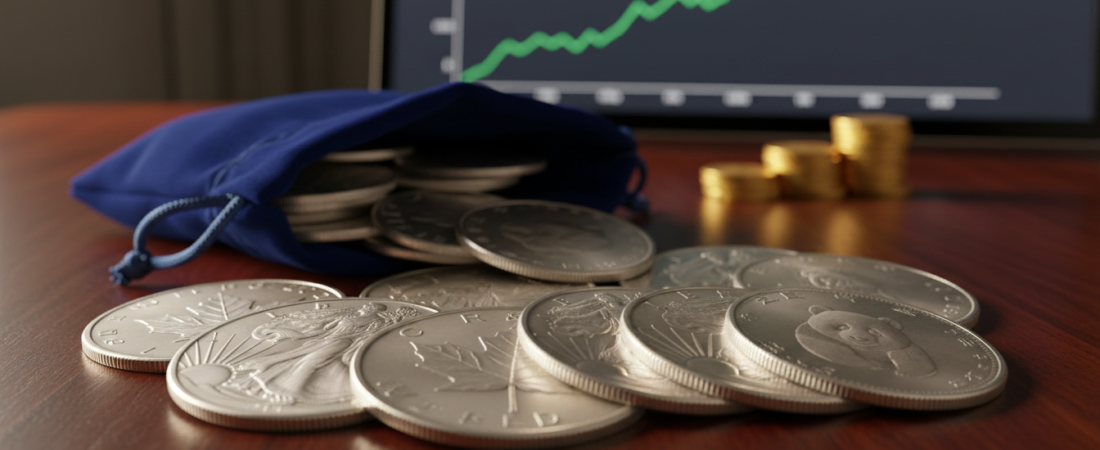
Surprising fact: the first known coin, the Lydian Lion, dates to around 600 BC — and modern rounds still follow the same idea: trusted weight and purity.
Silver coins are flat, rounded pieces struck from pure metal or an alloy. Modern bullion often reads .9999 fine, and sovereign mints back weight, purity, and a face value that helps liquidity.
This guide sets clear expectations for U.S. buyers. You will learn how to compare premiums, check authenticity, store safely, and decide when selling makes sense.
We explain bullion value versus collector upside, why many investors blend both paths, and how a premium over spot changes break-even math. The 2025 top list follows, but availability and premiums can shift with markets and goals.
Think of silver within precious metals as a tangible diversifier with volatility and risk. This article aims to help you choose products confidently and purchase online in the United States.
Key Takeaways
- Understand what modern silver coinage means: purity, legal tender, and mint backing.
- Learn to compare premiums, storage options, and common counterfeit checks.
- Know the difference between bullion value and numismatic premium.
- See how premium over spot affects break-even and resale value.
- Use the 2025 list as a starting point; adjust choices to your goals and liquidity needs.
Why investors in the United States are buying physical silver coins now
Direct ownership appeals to many Americans who want assets they can control outside banks and brokerage platforms.
Inflation hedge and currency risk: When inflation rises or confidence in fiat dips, physical silver can act as a store of purchasing power. Short-term price swings remain common, so many view these holdings as a diversification tool rather than a quick profit play.
Industrial versus investment demand: Industrial uses—electronics, solar panels, and electrification—add real-world demand that can support long-term interest. That same link to industry also creates cycles; growth stories help the narrative but do not remove volatility.
How coins compare to alternatives: ETFs, mining stocks, and pooled accounts offer convenience and low fees, but they add counterparty risk and tracking error. Direct possession eliminates custody risk and gives flexibility for partial sales, which is handy when you want to liquidate a small portion without selling everything.
| Option | Counterparty Risk | Liquidity |
|---|---|---|
| Physical coins | Low | High (retail) |
| ETFs | Medium | High (market hours) |
| Mining stocks | High | Variable |
What makes a silver coin a strong long-term hold
Long-term confidence in a silver coin rests on how easily it trades and how well its metal is certified. Liquidity and recognizability mean you can sell fast in the U.S. and get bids near spot for widely known issues.
Liquidity and recognizability in the bullion market
Liquidity describes how quickly a piece converts to cash and how close bids sit to spot price. Widely recognized coins trade with tight spreads in auction houses, dealers, and secondary markets.
Purity, weight, and guaranteed silver content from sovereign mints
Sovereign mints back weight, fineness, and silver content. Read specs: troy ounce, fineness like .999 or .9999, and face value. These items support trust and resale ease.
Premium over spot and numismatic value vs bullion value
Premiums reflect manufacturing and demand; two pieces with identical silver content can carry different premiums. A higher premium raises your break-even spot price.
“Numismatic value depends on rarity, condition, and collector demand; it can outperform or lag melt value.”
Practical approach: keep a liquid core of government-backed bullion and a small satellite of semi-numismatic pieces. When choosing, filter by tradability, security features, reasonable premiums, and steady demand.
Types of silver products you can buy: coins, rounds, and bars
Each product type offers trade-offs in recognition, premium, and storage.
Investment-grade bullion as legal tender
Legal tender bullion pieces carry a face value and government backing. That backing often drives stronger resale demand and slightly higher premiums above spot. Many U.S. dealers price these items with tight spreads because they are widely recognized.
Proof pieces for collectors
Proof pieces receive special striking that produces mirror-like fields and frosted designs. Mintage runs are smaller and packaging is collector-focused, so buyers often pay more for aesthetics and rarity than raw metal value.
Privately minted rounds and cost efficiency
Rounds are privately issued, non-legal tender pieces that usually sell with lower premiums. That makes them efficient when you want more ounces per dollar. Recognition is lower than sovereign issues, so resale bids can vary.
Bars and junk pre-1965 U.S. pieces
Bars are cost-effective and dense for storage; very large bars may have fewer buyers. Junk pre-1965 U.S. coins consist of 90% metal and are popular for small-denomination liquidity and barter-style use.
Match product to your goal: choose sovereign legal tender for tradability, rounds or bars for lower premium per ounce, and proof or historic 90% pieces if you want collectible upside.
Best silver coins to buy for long term holding: how to choose the right fit
A practical selection strategy balances a liquid core, low-cost ounces, and a small collector sleeve. Start with widely known sovereign issues; they trade easily across U.S. dealers and online markets.
Pick 1–2 core pieces that dealers and buyers recognize. Examples include the american silver eagle and the silver maple leaf, which offer strong liquidity and tight spreads.
Layer low-premium ounces next. Compare total per-ounce cost across sovereign bullion, private rounds, and bars. Small differences in premium add up as you stack more metal.
Semi-numismatic plays add upside when annual design changes, limited mintages, or collector interest persist. Keep these as a smaller percentage of your stash.
IRA considerations: custodians typically require specific fineness and documentation. Verify eligibility of a given issue with a reputable custodian before adding it to an IRA account.
“Pick core liquidity first, then add volume and a collector slice.”
- Avoid chasing hype.
- Watch buyback spreads.
- Skip obscure products that local shops won’t bid on.
Next, we’ll rank mints and features that matter most for 2025 selection and resale ease.
Top silver bullion coins from sovereign mints to prioritize
Government-backed issues from major mints give buyers predictable specs and broad market appeal.
United States Mint standards and why government backing matters
The United States Mint guarantees weight, fineness, and legal tender status. Recognition and liquidity follow; U.S. buyers often accept a small premium for ease of resale and trust.
Royal Canadian Mint security and Bullion DNA
The Royal Canadian Mint uses radial lines and Bullion DNA technology on maple leaf pieces. These features make authentication simpler and help preserve resale value in global markets.
Royal Mint modern anti-counterfeiting features
The Royal Mint adds micro-texture and laser-engraved details on Britannia issues. Those design elements lower counterfeiting risk and support market confidence worldwide.
Perth Mint annual programs and collector demand
Perth’s ongoing series—Kookaburra and Lunar—change reverses each year. That steady refresh can create collector interest above melt value and attract buyers beyond pure bullion demand.
“Choose mints that pair recognizability, strong security features, and steady market demand.”
| Mint | Key security feature | Market benefit |
|---|---|---|
| United States Mint | Government guarantee & legal tender | High U.S. liquidity |
| Royal Canadian Mint | Radial lines & Bullion DNA | Easy authentication, strong resale bids |
| Royal Mint | Micro-texture & laser engraving | Lower counterfeiting risk |
| Perth Mint | Annual design programs | Collector demand beyond melt |
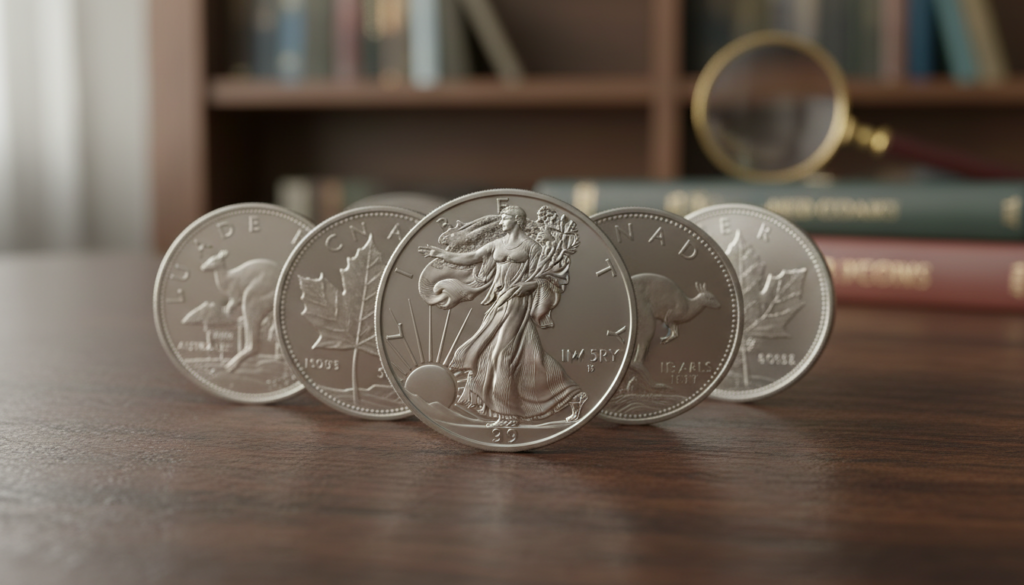
Top silver coins to buy and hold in 2025
A compact 2025 checklist highlights widely traded issues that balance liquidity, purity, and collector interest.
American Silver Eagle: One troy ounce of .999 fine silver with U.S. legal tender status makes this the fastest-selling piece at many American shops. Recognition and steady demand keep spreads tight.
Canadian Silver Maple Leaf: At 1 oz and .9999 pure silver, the Maple Leaf adds radial lines and Bullion DNA for easy authentication. It competes with Eagles on trust and resale value.
British Silver Britannia: A 1 oz .999 issue with modern security features. Global recognition makes it a useful diversification pick inside a U.S. stack.
Mexican Libertad: Low mintage and collector interest drive premiums higher. Availability is variable, so expect wider spreads than mainstream bullion.
Austrian Philharmonic: One ounce of .999 silver with euro denomination and steady worldwide demand. It often trades with predictable premiums.
Australian Kangaroo & Kookaburra: Perth Mint pieces at .9999 purity. Annual reverse changes and laser-engraved privy marks attract collectors while keeping bullion credibility.
Chinese Silver Panda: Often 30 grams (.965 oz) with yearly designs. Condition and year matter; authentication is critical for collector premium.
90% U.S. junk silver: Fractional dimes, quarters, and halves focus on melt value. They are handy for small sales and thinking in silver content per $1 face.
Krugerrand, Morgan, and Lunar issues: Krugerrand (.999, springbok) is gaining recognition. Morgan dollars and Year of the Snake pieces carry collector premiums and work well as a smaller satellite allocation.
“Pick a liquid core, add low-premium volume, and keep a small collector sleeve for upside.”
| Coin | Purity / Weight | Typical U.S. Liquidity |
|---|---|---|
| American Silver Eagle | 1 oz /.999 | Very high |
| Canadian Silver Maple Leaf | 1 oz /.9999 | High |
| British Silver Britannia | 1 oz /.999 | High |
| 90% U.S. junk silver | Fractional /.900 | Medium–High (melt buyers) |
Silver Eagle vs. Silver Maple Leaf: which is better for U.S. long-term investors
If you need a clear comparison, look at premiums, resale spreads, and security features when choosing a core stack option.
Premiums, liquidity, and resale spread in the United States
american silver eagle often carries higher premiums in the U.S. because dealers and local buyers know it well.
That familiarity shrinks resale spreads and speeds sales at retail shops. Higher upfront cost can raise your break-even value if spot falls.
Purity differences and why .999 vs .9999 usually doesn’t change melt value
The silver maple leaf is .9999 fine versus the Eagle’s .999. This extra digit looks impressive, but melt value shifts negligibly.
Purity affects marketing and collector taste more than usable silver content for most investors.
Security features and counterfeiting risk considerations
Maple Leaf pieces add radial lines and Bullion DNA, easing authentication. The Eagle offsets that with broad recognizability.
Both reduce risk when sourced from reputable dealers, so practice good provenance and keep receipts.
“Choose Eagles for U.S. liquidity, Maples for higher fineness and authentication, or hold both.”
- Keep original tubes and paperwork.
- Sell where buyback spreads are tight and get multiple bids.
How much silver content you’re actually buying
Before you pay, learn exactly how much metal is inside each piece and how it compares across mints. That clarity stops surprises when you check melt value or compare premiums.
Understanding troy ounce vs grams and common coin weights
Most flagship bullion are listed as one troy ounce, which equals 31.1035 grams. Some popular issues use metric weights: Chinese Pandas often weigh 30 grams (about 0.965 troy oz).
Always check the unit. A 30 g listing is slightly less metal than a 1 oz piece even though the labels can look similar to new buyers.
.999 fine vs 90% alloy and durability trade-offs
Fineness tells you the fraction of pure metal. A .999 or .9999 piece is nearly pure silver, while pre-1965 U.S. junk is typically .900 fine. To get net silver weight, multiply total weight by fineness.
Example: a 90% dime with 0.0794 total troy oz × 0.900 ≈ 0.0715 troy oz of pure silver.
Harder alloys (90%) stand up better to handling. Fine silver can scratch more easily, which matters if you care about collector condition.
- Confirm weight unit (g vs troy oz).
- Confirm fineness (.999/.9999 vs .900).
- Confirm mint and series and whether pricing is per coin or per face value.
“Read listings for net fine weight, not just gross weight or face value.”
Rule of thumb: calculate net metal, compare like with like, and favor listings that state fine weight explicitly. That habit saves money and makes resale clearer down the road.
How to buy silver coins online safely in the United States
Shopping online expands options but raises questions about authenticity and true cost. Use a short workflow that keeps risk low and clarifies total price.
Choosing reputable dealers and verifying current spot price
Step 1: check the live spot price before comparing listings.
Step 2: confirm seller reputation: transparent pricing, clear buyback policy, customer reviews, shipping insurance, and detailed product pages.
Comparing coins, rounds, and bars for total cost
Look past sticker price. Compare price per ounce, expected resale spread, and packaging that preserves condition.
Remember: regulated sovereign bullion often trades with tighter spreads and better liquidity than private rounds or large bars.
What to look for in product listings: year, mint, condition, and packaging
Listings should state year, mint mark, weight, and fineness. Condition (BU, proof) and original packaging matter if you plan to resell at a premium.
“Verify spot, check total cost, and buy from sellers with clear policies and strong reviews.”
| Checklist item | Why it matters | Red flag |
|---|---|---|
| Current spot price | Sets baseline for premiums | Seller price far above spot without reason |
| Seller reputation | Reduces scam and return risk | No reviews, vague policies |
| Listing details | Year, mint, condition affect value | Missing weight/fineness or generic photos |
| Shipping & insurance | Protects shipment and provenance | No tracking or insured options |
- Step-by-step: check spot → compare premiums → confirm reputation → pay with secure method.
- Marketplaces and peer-to-peer platforms: higher counterfeit risk; insist on testing and receipts on arrival.
- Liquidity note: widely recognized coins may cost a bit more but sell faster.
Quick screenshot checklist: spot, premium, mint, weight/purity, shipping/insurance, return policy, and storage plan. Keep these handy when placing an order.
How to spot fake silver coins before you buy or sell
A few low-cost tests and visual checks often separate genuine mint issues from convincing fakes.
Why it matters: Counterfeit risk grows as your stack increases and when purchases come from less controlled channels. Verification protects resale value and prevents costly mistakes.
Mint security marks, micro-engraving, and design checks
Compare a suspect piece against verified images from the issuing mint. Look at design sharpness, edge reeding, font styles, and known security marks such as micro-engraving, privy marks, or radial lines.
Confirm fineness stamps like .999 and check year and mint location. Many fakes miss tiny details collectors notice quickly.
Simple at-home tests: magnet slide and ice melt
Use a strong neodymium magnet. A genuine piece should not stick; if it clings or drags oddly, suspect base metals.
Try the ice melt test. Silver conducts heat well, so a small ice cube melts noticeably faster on real metal than on most substitutes.

When to use test kits or professional authentication
Weigh and measure with a precision scale and calipers. Fakes often miss exact specs. Acid kits reveal composition but can harm finish; use them only when willing to risk cosmetic damage.
If value is high or doubt remains, seek a reputable dealer, certified grader, or electronic tester. Professional authentication avoids buyer remorse and preserves future resale value.
“Compare, weigh, and when in doubt, get an expert opinion.”
- High-risk scenarios: suspiciously low price, missing packaging, vague listings, or sellers who resist detailed photos.
- Keep receipts and provenance when possible; that boosts trust and resale appeal.
Storage and security for silver coins you plan to hold long term
Choosing the right storage affects safety and future resale value. Keep access, protection, and preservation in balance when you decide where to keep your stack.
Home safe vs. professional vault and insurance considerations
Home safes give quick access and control. A high-quality, boltable safe with a fire rating and anchored installation reduces theft risk.
Professional vaulting offers higher physical security and often better insurance options. Vault providers store items in segregated or allocated formats and can simplify documentation for estate planning.
Insurance matters: many homeowner policies limit coverage for bullion. Confirm whether a policy covers market value, numismatic value, or only named per-item coverage. Keep photos, receipts, and serial numbers where applicable.
Protecting coins from tarnish, milk spots, and handling damage
Handle by edges and avoid fingerprints; skin oils can cause spots over time. Use cotton gloves for proofs and high-grade collector pieces.
Store coins in a cool, dry place. Low humidity and stable temperatures reduce tarnish and milk spotting. Use silica gel packs and airtight containers when practical.
Organizing by tube, capsule, or album for bullion vs numismatic coins
Tubes are efficient for standard bullion rounds and reduce space. Capsules protect high-premium coins and preserve visual condition.
Albums or flip holders work well for historical or graded pieces that collectors prize for condition and provenance. Label contents and keep inventories with photos and invoice dates.
“Good storage protects physical integrity and preserves potential numismatic value.”
- Inspect storage periodically: check humidity packs, seals, and safe bolts without over-handling coins.
- Document holdings: photos, receipts, and certificates improve insurance claims and resale trust.
- Match storage option to value and access needs: home safe for control; professional vaulting for higher security and insurance clarity.
Portfolio fit, risk management, and when to sell
Start by defining a clear allocation for precious metal exposure within your broader financial plan. Keep positions sized so a price swing does not force emotional decisions.
Silver price volatility and how dollar-cost averaging can help
Volatility is normal. Use dollar-cost averaging: buy smaller amounts over weeks or months. This smooths entry price and reduces regret over timing.
Liquidity planning: selling portions vs. liquidating all at once
Keep a core of highly recognizable bullion and a smaller collector sleeve. That gives a quick sale option and a slower, potential-value option for pieces that may fetch premiums.
Market drivers to watch
Watch inflation expectations, geopolitical stress, industrial demand, mining supply, and investor sentiment. These factors move price and affect resale demand.
“Plan exit points in advance — set price targets or rebalance triggers rather than reacting to headlines.”
- Treat metal as a diversifier, not a guaranteed-return investment.
- Sell portions to meet cash needs; liquidate core bullion first when spreads are tight.
- Document targets and keep receipts to preserve value and ease resale.
Tax considerations for silver coin investing in the United States
Before you check out: confirm how federal and state tax rules affect your after-tax proceeds. Rules can change the math on an investment and may alter which option makes sense.
Collectibles taxation basics and why recordkeeping matters
Physical coins are often treated differently than stocks. At the federal level, some sales may qualify as collectibles and face higher capital gains rates than standard assets.
Keep neat records: purchase date, cost basis, dealer invoices, shipping, and grading or authentication fees. These items affect taxable gain and the coin’s reported value when you sell.
Holding an asset for multiple years can change planning choices. Clear documentation simplifies reporting if you sell part of your stash or transfer assets into an IRA-like structure.
Sales tax rules vary by state: what to confirm before you buy
Sales tax treatment differs by state and by product type. Some states exempt certain bullion; others apply tax unless the piece meets strict criteria. Confirm rules before checkout to avoid surprise costs.
| Item | Federal | State |
|---|---|---|
| Capital gains | May be higher for collectibles | Depends on state income tax |
| Sales tax at purchase | Not federal | Varies by state and product |
| Recordkeeping needed | Yes: basis, fees, dates | Yes: receipts help audits and resale |
“Taxes and transaction costs are part of your true premium.”
- Practical next step: save invoices and take photos of high-value pieces.
- Consult a qualified tax professional if you trade often or use an IRA option.
- Remember: include taxes and fees when you calculate net value and plan exits.
Silver vs. gold coins for long-term holding
When weighing precious metals, many U.S. investors find that one metal stretches cash further while the other concentrates value into less space.
Affordability and ounce accumulation with silver bullion
Affordability matters. At a given budget, you can accumulate far more ounces of silver than gold. That appeals to steady stackers who add monthly buys.
More ounces can smooth entry costs and let you practice dollar-cost averaging with smaller purchases.
Storage, portability, and liquidity trade-offs vs. gold
Gold concentrates value in a small space. A few bars or coins can equal thousands in cash value.
Silver takes more room and weight for the same dollar value. This affects home safe choice and transport plans.
Liquidity differs too: gold often sells easily at high dollar amounts, while silver can be more volatile because industrial demand moves supply and market interest.
Building a balanced precious metals allocation
Practical plan: start with a core of recognizable bullion, set a target allocation, and rebalance on schedule rather than chasing headlines.
Allocate volume to lower-cost ounces and a smaller slice to denser value pieces. Prioritize recognizable, liquid issues with strong authentication features when you add either metal.
| Feature | Gold | Silver |
|---|---|---|
| Per-dollar ounces | Low | High |
| Storage density | High (compact) | Low (bulky) |
| Volatility | Lower historically | Higher (industrial links) |
| Typical liquidity at scale | Excellent | Good (varies by issue) |
“Mix volume and density: both metals serve different roles in a balanced stash.”
Conclusion
Conclusion
Focus on what works. Choose highly recognizable government-backed pieces with clear metal specs and tight resale spreads. That approach preserves liquidity and protects value.
Start a core of American Eagle or Maple Leaf issues, then add low-premium ounces and a small collector sleeve as your goals permit. Treat documentation and receipts as part of the asset.
Buy based on total cost and resale spread, not spot alone. Use reputable dealers, verify listings, and learn simple counterfeit checks to avoid losses.
Finally, secure storage, minimal handling, and a written plan help you act calmly over time. Pick the best option that matches your goals, then buy consistently and stay disciplined.