
Affiliate disclosure: purchases made throught the link may pay the affiliate a commision at no extra cost to you. Thanks for helping keeping the site running. Informational in nature only, not financial advice.
Surprising fact: experts note that in 2025 one metal rose about 70% YTD while the other jumped roughly 125% YTD, making the choice between them a timely question for savers.
This section frames the comparison around U.S. retirement needs. We’ll focus on diversification, downside protection, and practical IRA rules instead of market hype.
The article will explain how each metal behaves, which timelines suit each, and what “best” means based on goals. Expect clear notes on stability versus volatility: one tends to add steady value, the other offers higher upside with more swings.
Many U.S. investors use self-directed IRAs to hold physical bullion, so rules, storage and fees matter as much as metal choice. See the best precious metals companies of 2026 later in this article to guide practical next steps.
Key Takeaways
- Recent strong gains make a metal comparison timely for U.S. savers.
- Use metals mainly to diversify and protect downside, not as a guaranteed profit.
- One metal leans toward stability; the other covers higher volatility and upside.
- Self-directed IRAs allow physical holdings, but rules and costs affect outcomes.
- The article ends with allocation frameworks and a decision checklist.
Why precious metals belong in retirement planning in 2026
As markets climb and uncertainty mounts, many investors are rethinking how precious metals can steady long-term savings. A mix of tariff worries, global turmoil, and early signals of rising jobless claims has raised the amount of economic uncertainty retirees face.


What’s driving renewed interest
Stretched stock valuations push retirement-focused savers to consider non-yielding assets that may behave differently in a downturn.
Inflation concerns also matter: when purchasing power feels threatened, many look to tangible stores of value. The yellow metal often leads that narrative, while the white metal gains support from industrial demand and tight supply.
Recent performance and what it signals (and doesn’t)
Recent strong runs—about 70% YTD for one metal and roughly 125% YTD for the other—raise interest but do not guarantee future gains. Big up years can also raise downside risk if timing is poor.
For retirees, the practical risk is sequence-of-returns damage and the emotional urge to sell after a drop. Disciplined allocation usually beats attempt at market timing.
| Driver | How it affects demand | Practical impact on savings |
|---|---|---|
| Geopolitical stress | Safe-haven buying rises | Can stabilize value during shocks |
| Inflation & real rates | Expectations boost store-of-value demand | May protect purchasing power |
| Industrial use & supply | Supports tighter prices | Can add upside but increase volatility |
Next: if both metals look attractive, the key question is how they behave inside tax-advantaged accounts and during real spending years—details that follow in the next section.
Gold vs silver for retirement portfolio: what actually differs
Deciding which metal to hold comes down to balancing calm price moves with the potential for bigger gains.
Stability vs. growth potential:
Stability tends to be steadier; growth can be jumpier
Gold usually moves in smaller steps. That means less stress when you need to sell during a downturn.
Silver can swing two to three times more than gold. Bigger leaps mean higher upside, but also higher short-term losses.
Industrial demand vs. monetary demand:
Our Top Company Pick for 2026

Minimum Investment with Augusta Precious Metals is $50,000.
See Our Full 2026 Company ComparisonReal economy exposure changes how prices react
About 55% of silver demand is industrial—electronics, solar panels, and EVs. When the economy expands, that can boost silver prices.
Gold sees more monetary and investment demand. That tends to hold value during shocks and makes price moves more predictable.
Market size and liquidity:
Market depth matters when investors need cash quickly
The silver market is roughly one-tenth the size of gold’s. Large trades can move silver prices more, which raises liquidity risk.
Gold’s deeper markets make it easier to buy or sell at scale with smaller spreads. That practicality matters most in withdrawal years.
| Feature | Typical behavior | Why it matters to retirees |
|---|---|---|
| Volatility | Silver: 2–3x swings; Gold: smaller steps | Higher volatility raises timing and sequence-of-returns risk |
| Demand drivers | Silver: ~55% industrial; Gold: monetary/investment | Industrial exposure can amplify cycles; monetary demand smooths shocks |
| Market size & liquidity | Silver market ≈ 1/10 size of gold | Smaller market = larger price impact for big sales |
| Growth potential | Silver often outperforms in strong bull runs | Can boost returns, but timing matters when taking distributions |
Bottom line: Use this comparison as the base for the next parts. We’ll cover specific pros and tradeoffs, then how IRAs, storage, and costs change the decision.
Gold in retirement portfolios: strengths, tradeoffs, and best-fit investors
Investors nearing spending years often favor assets that smooth returns and cut the chance of selling at a loss. In that role, a well-known precious metal frequently serves as a stabilizer during market shocks and tense geopolitics.

Our Top Company Pick for 2026

Minimum Investment with Augusta Precious Metals is $50,000.
See Our Full 2026 Company ComparisonSafe-haven role during downturns and geopolitical stress
Stability matters: This metal tends to move in smaller steps than others, which can reduce sequence-of-returns risk when withdrawals begin.
Practical benefit: Less volatility can help retirees avoid selling after a sharp drop to cover living costs.
As an inflation hedge when real rates fall
The asset often gains appeal when real rates decline and cash loses buying power. That makes it a natural hedge inflation tool in many low-rate scenarios.
The drawback retirees forget: no yield, plus fees that can drag returns
Tradeoffs: Precious metals pay no interest or dividends, so opportunity costs rise when rates climb.
Inside IRAs, custodian fees, storage, insurance, and dealer spreads can create a hidden drag on net returns.
- Best fit: savers 10–15 years from withdrawal, those prioritizing preservation, or anyone adding a stability hedge alongside stocks and bonds.
- Next: compare this steadier anchor with a higher-volatility alternative that can act like an accelerator.
Silver in retirement portfolios: strengths, tradeoffs, and best-fit investors
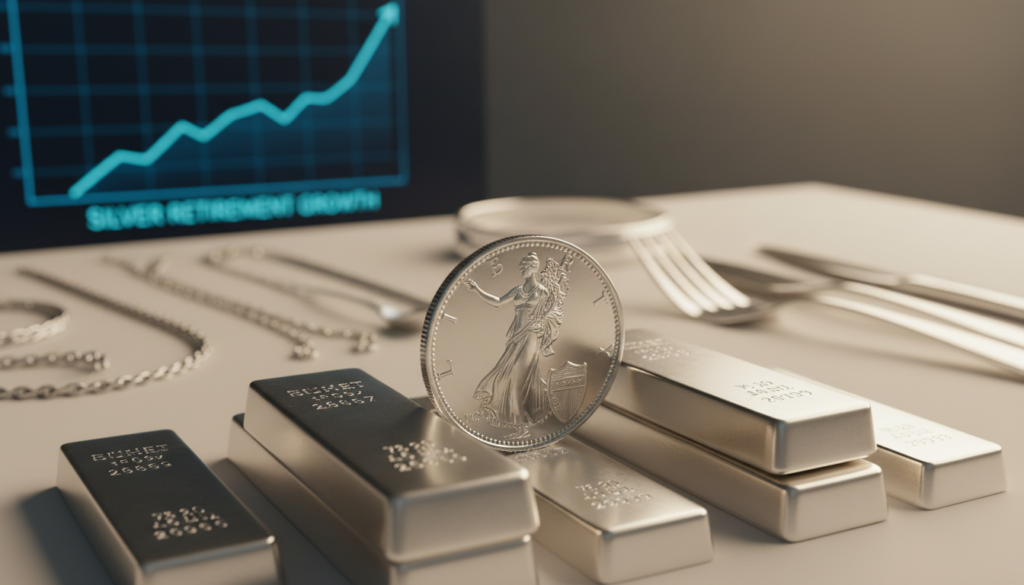
When does the white metal truly shine? It tends to outperform during broad precious metals bull runs, when momentum draws big inflows and physical supply tightens. Industrial demand—electronics, solar, and EVs—helps amplify rallies when manufacturing expands.
When this asset can outperform
Strong demand and supply stress can push prices sharply higher. Momentum trading can add fuel, and tight inventories often spark steep short-term gains. These drivers support outsized growth compared to the yellow metal.
Volatility reality check
Volatility is real: experts cite swings two to three times larger than the yellow metal. That makes timing and liquidation windows more important inside an IRA.
Contribution limits and required distributions can force sellers during downturns. Higher short-term drops raise sequence-of-returns risk for savers who need liquidity.
Affordability and practical tradeoffs
Lower entry cost makes it easier for smaller accounts to build exposure incrementally. But more ounces mean more bulk.
Bulk increases handling and vaulting needs, which can raise storage costs per dollar compared with larger-value bars. That tradeoff matters to many U.S. investors.
| Factor | Typical effect | Why it matters | Best-fit investors |
|---|---|---|---|
| Demand drivers | Industrial + investment | Boosts growth in expansions | Long-horizon, growth-seeking |
| Volatility | 2–3x swings vs yellow metal | Raises timing risk in an IRA | Tolerant of drawdowns |
| Storage | More volume, higher handling | Can increase storage costs | Smaller accounts or satellite holdings |
Gold IRA vs. Silver IRA basics for U.S. retirement accounts
Setting up an IRA that will hold physical bullion adds custody, storage, and compliance steps that a typical brokerage account does not. Self-directed IRAs let an individual retirement account include approved bullion instead of stocks or bonds.

Top Precious Metals Companies of 2026
A streamlined side-by-side snapshot to help you compare leading precious metals providers for physical metals and IRA rollovers.
Note: Minimums/fees can vary by account type and promotions. Always confirm details directly with the provider.
How a self-directed setup works
Choose a custodian that supports iras holding precious metals. Fund the account via transfer or rollover. Then select approved coins or bars and arrange delivery to an approved depository.
Key IRS rules to watch
- Fineness: gold typically must be 99.5% pure; silver is usually 99.9%.
- Only IRA-approved coins and bars qualify; many collectible items are disallowed.
- Metals must be stored at IRS-approved depositories — not at home.
Distributions and taxes
Selling inside the ira generally keeps tax rules within the account. Taking physical possession counts as a distribution and can trigger income tax or penalties depending on whether the account is traditional or Roth and the owner’s age.
Operations matter: custodians, shippers, depositories, and record-keeping all affect outcomes. Next, we’ll break down real-world costs like premiums, spreads, and storage insurance that change net benefits.
Costs and logistics: storage, insurance, premiums, and liquidity when you need cash
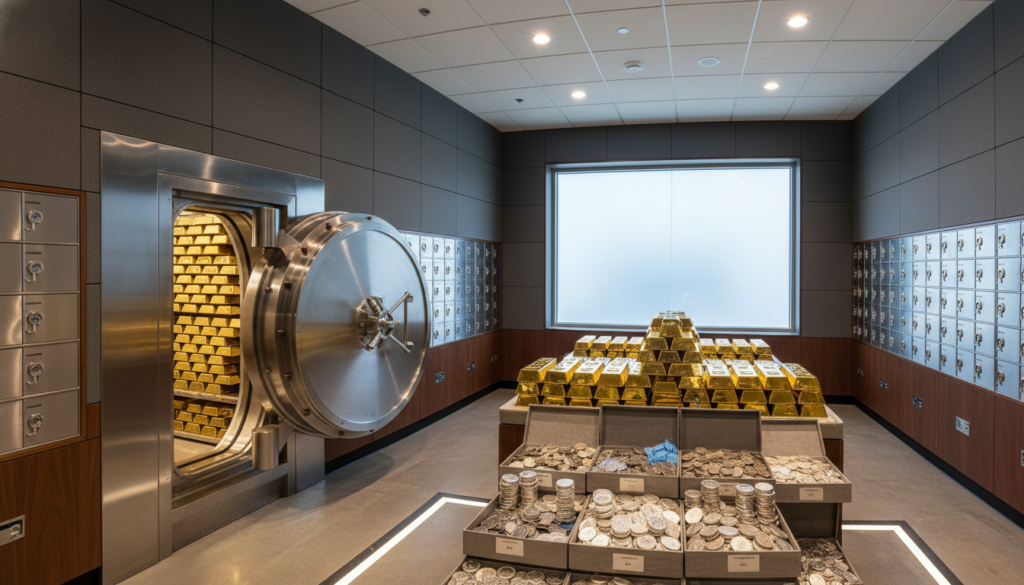
How you store, insure, and sell metals matters as much as the initial purchase choice. Hidden fees and handling steps can erode gains quickly. Know the full cost stack before you commit an account to physical holdings.
What makes up the all‑in cost
Custodian fees, depository storage fees, shipping/handling, and transaction costs form the basic layer. Add dealer premiums and bid‑ask spreads when buying and selling; they reduce realized value.
Why one metal can be pricier to vault
Value density matters. One kilogram of gold is roughly $130,000 while one kilogram of silver is about $1,670. That gap means silver takes far more space per invested dollar and can raise storage costs and handling logistics.
| Item | Typical fee impact | Why it matters |
|---|---|---|
| Custodian fee | $50–$200/yr | Ongoing drag on small accounts |
| Storage & insurance | Varies by weight & value | Bulkier metal raises per‑dollar storage costs |
| Dealer premium & spread | 1–8% combined | Reduces net price on sale |
Insurance, audits, and a liquidity moment
Verify whether insurance is included, coverage limits, audit frequency, and who bears transit risk. In a cash emergency, larger bars are easier to move at scale. Bulkier holdings may delay liquidation and raise transaction costs.
Action step: See our list of the best precious metals companies now: https://givemethegold.com/best-precious-metals-companies-of-2026/
How to choose your mix: allocation frameworks by timeline and risk
Start by deciding when you’ll need cash and how much portfolio fluctuation you can tolerate. That time decision drives whether you prioritize steady value or greater upside.
Near retirement: favor stability and liquidity
If withdrawal is soon, lean heavier toward the steadier metal to reduce sequence-of-returns risk. That helps avoid selling into a downturn to cover expenses.
Trump & Elon Reunite for Secret Silver Pact
Whispers are coming out of Mar-a-Lago and Silicon Valley…
Trump and Elon Musk may not agree on everything. But insiders say behind closed doors, they’re betting on the same thing:
Silver.
And the numbers explain why:
- Silver is now up more than 150% this past year, blasting through a new all-time high of $84.50 an ounce.
- Musk’s empire — Tesla, SpaceX, SolarCity — is devouring silver for EVs, satellites, and solar panels.
- Trump’s deregulation agenda could unleash even more domestic demand.
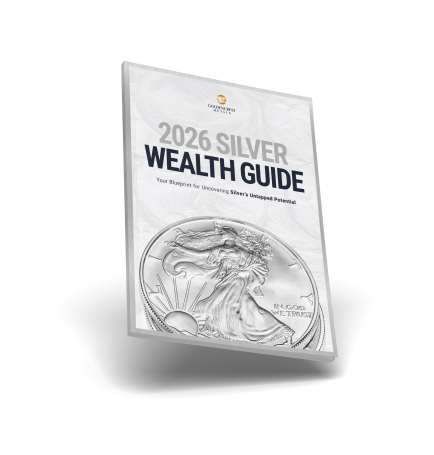
That’s why we created this brand new Silver Wealth Guide — your roadmap to what Trump, Musk, and the elites already see coming.
Keep precious metals a small, liquid slice so you can access cash without large spreads or delays.
Longer horizons: add measured growth potential
If you have decades before spending, a modest allocation to the more volatile metal can boost long-term growth. Rebalance regularly to lock gains and limit runaway risk.
Practical allocation ranges
| Investor time horizon | Example mix (gold/silver) | Why it fits |
|---|---|---|
| Near-term (0–5 years) | 70/30 | Prioritizes stability and liquidity during withdrawals |
| Mid-term (5–15 years) | 60/40 | Balances steady value with some growth potential |
| Long-term (15+ years) | 50/50 | Accepts higher volatility to seek greater returns |
Rules of thumb: cap precious metals at about 10% of total assets. Use them alongside stocks, bonds, and mutual funds rather than replacing those core holdings.
Rebalance periodically so a fast run doesn’t push metals to be a larger share than you planned. That simple discipline keeps risk aligned with your goals.
Conclusion
Bottom line, choose metals by role: one typically supports stability and safe‑haven aims, while the other adds volatility and upside tied partly to industrial demand.
Retirement priorities matter: plan liquidity, watch fees, and avoid forced selling during a downturn. These steps often matter more than picking next year’s top performer.
Follow IRA rules: use an approved custodian and depository, confirm product eligibility, and know how distributions are taxed. A properly run gold IRA or similar account changes outcomes.
Precious metals can diversify a plan, but they carry market risk and do not create income like dividends. Pick a mix that matches your time horizon, risk tolerance, and the role you want them to play.
Next step: compare reputable providers, fees, and storage policies before opening or funding an account; see our provider list linked earlier for a quick start.