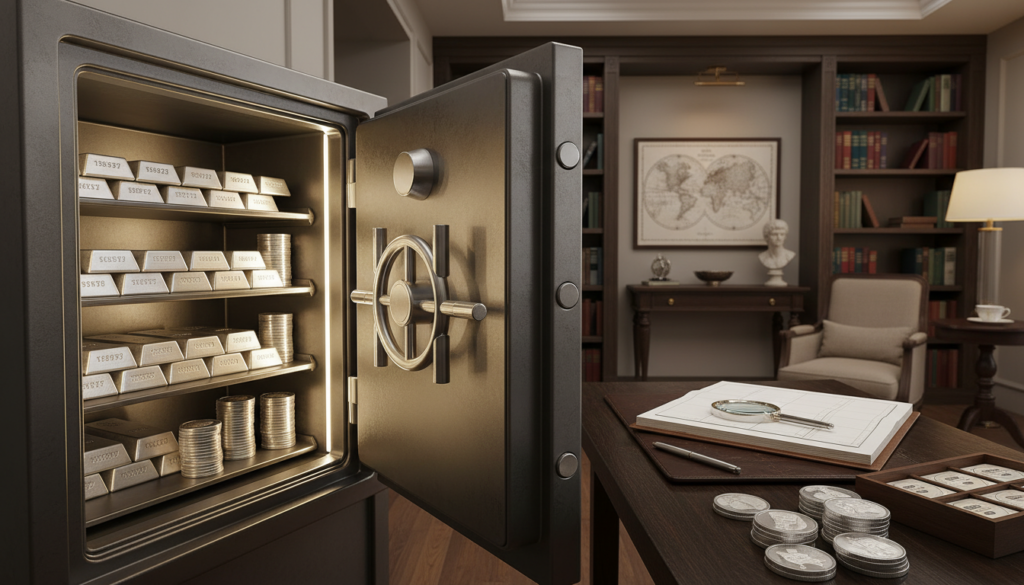
Safeguarding Your Silver: At-Home vs Depository Storage
Surprising fact: nearly one in five small bullion owners report a loss, theft, or damage incident within a decade, a reality that changes how Americans protect precious metals.
This guide compares how to store silver safely at home vs depository so U.S. readers can make a confident, practical choice. Expect a clear A versus B look at security, access, privacy, and cost — not a sales pitch.
Silver is bulky and often held in larger amounts, which makes storage different from gold. We’ll cover theft and the other risks that cut value, like fire, water, and paperwork problems. You’ll get a side-by-side decision lens and a simple hybrid strategy for holding some pieces nearby while keeping most protected professionally.
Key Takeaways
Learn the trade-offs between quick access and higher security.
Understand costs, insurance realities, and common pitfalls.
See what “good” storage looks like for new buyers and long-term holders.
Discover hybrid options that balance convenience and protection.
Protect against theft, damage, and lost value through smart choices.
Get Your Free Silver Information Kit from GoldenCrest Metals Now
Take advantage of exclusive promotions and expert guidance. GoldenCrest Metals makes it easy to diversify your retirement with gold and silver.
Why Silver Storage Matters in the United States Right Now
Rising theft and climate threats are making storage choices urgent for U.S. owners of precious metals. In practical terms, poor storage can reduce resale price or slow liquidation when condition or documentation is lost.
The real-world risks
The FBI reported that in 2019 more than $1.05 billion in jewelry and precious metals were stolen in the U.S., with only 3.5% recovered. That statistic is a clear warning: hiding items without a plan is risky.
Poor handling leads to tarnish or packaging damage. Missing assay cards, lost provenance, or damaged coins can cause lost value, cutting bids and slowing sales.
Core trade-offs investors weigh
Owners balance four main factors: security, access, privacy, and insurance. Each storage path—personal safes, bank boxes, or professional vaults—scores differently on these.
Factor
Personal Safe
Bank Safe Deposit Box
Professional Depository
Security
Moderate (depends on safe & bolts)
High (controlled entry, variable oversight)
Very high (24/7 monitoring, audits)
Access
Immediate
Limited hours
Scheduled retrievals
Privacy
High (private)
Moderate (bank records exist)
High (third-party custody)
Insurance
Often limited without rider
Banks usually disclaim liability
Typically includes all-risk policies
Access matters beyond convenience. If you need quick liquidity, retrieval time and the chance your metals remain intact are critical.
Silver’s weight and bulk push many owners toward obvious hiding places or less secure containers, which raises theft and damage risks. Next, we’ll examine personal safes and why some owners still pick them despite responsibilities.
Storing Silver at Home: Control and Convenience, with Real Responsibilities
Many owners pick personal safes when they want quick access and total control over their bullion. This choice fits buyers with modest stacks, collectors who rotate pieces, and privacy-minded investors who avoid third parties.
2026 Rankings • U.S. Investors
Top Precious Metals Companies of 2026
A streamlined side-by-side snapshot to help you compare leading precious metals providers for physical metals and IRA rollovers.
Note: Minimums/fees can vary by account type and promotions. Always confirm details directly with the provider.
Best-fit scenarios
When home makes sense: small holdings, emergency liquidity needs, collectors with frequent trades, and anyone valuing privacy and immediate access.
Upsides of personal custody
Practical advantages: 24/7 access, no monthly storage bills, and direct control over sale timing and handling. You can sell locally and act fast during markets that move.
Downsides and real risks
Your residence increases theft and disaster exposure. Even a top-rated safe can be targeted if routines are predictable or visibility is high.
“A house is not a vault — plan for burglary, fire, smoke, flooding, and paperwork loss.”
Home hardening checklist
Pick a fire-rated safe with burglary ratings (TL-15 where possible) and bolt it to structure.
Use a monitored alarm and keep delivery routines discreet.
Split holdings across locations to avoid single-point failure.
Store purchase records and assay cards separately from the valuables.
Insurance and documentation
Standard homeowner policies often cap precious metal coverage. Verify limits and buy a rider if needed. Keep receipts and provenance in a separate locked file or digital vault to prove ownership in case of loss or damage.
Practical threshold: as bars, weight, or total market value rise, personal custody becomes less practical and more attention-grabbing—time to consider professional options.
Professional Depository Storage: Maximum Security, Insurance, and Verification
A purpose-built vault offers institutional controls that most residences and bank boxes simply do not.
What these facilities are and why they differ
Professional depositories are purpose-built facilities designed for precious metals custody. They combine hardened construction, controlled entry, and documented chain of custody.
They differ from bank deposit boxes because many non-bank vaults provide explicit insurance and independent audits. Banks often disclaim liability for contents held in a box.
Core benefits
24/7 monitoring and layered surveillance.
All-risk insurance that covers theft, fire, natural disasters, and unexplained loss.
Third-party audits and inventory reconciliation for verified custody.
“Depositories convert private risk into documented, insured custody — a meaningful shift for higher-value holdings.”
Trade-offs and practical costs
Expect ongoing fees: common annual rates run roughly 0.28%–0.65%, plus minimums (often $10–$20/month) and shipping or withdrawal charges.
Access is appointment-based and withdrawals can take processing time. That trade-off buys much stronger protection for larger assets.
Allocated vs. segregated storage
Allocated records specific quantities and often returns equivalent items. Segregated keeps your exact pieces separate and suits collectibles or unique bars.
Avoid unallocated options that can leave owners as unsecured creditors.
Provider checklist
Security certifications (EN/UL) and clear audit reports.
Transparent pricing and disclosure of all fees.
Reputable underwriters (for example, Lloyd’s of London) named on insurance policies.
Clear location, custody policies, and retrieval timelines.
Feature
Typical Offering
Why it matters
Security Layers
Hardened vaults, access logs, CCTV
Reduces theft and tampering risk
Insurance
All-risk policies, named underwriters
Covers loss, fire, natural events
Fee Structure
0.28%–0.65% annually + minimums
Predictable holding costs for budgeting
Storage Type
Allocated or segregated
Choose based on bullion vs collectibles
how to store silver safely at home vs depository: A Side-by-Side Decision Guide
Storage choices boil down to a few clear trade-offs: control, verified custody, and ongoing costs. Below is a compact comparison that helps match priorities with the right option for U.S. holders.
Security and insurance comparison
Home gives direct control but carries homeowner policy limits and often needs a rider for precious metals.
Depository offers layered security, audits, and all-risk insurance that typically covers theft, fire, and unexplained loss.
“Home protection depends on safe quality and habits; professional custody converts private risk into documented coverage.”
Access and convenience
Home access is immediate, ideal for small stacks or emergency liquidity.
Professional vaults require appointments and processing. That delay is usually fine for long-term holdings but can be a problem for quick sales.
Privacy and legal considerations
Keeping metals at your residence raises visibility concerns—deliveries and safes can attract attention.
Banks and deposit boxes may limit access and generally do not insure contents. Non-bank vaults reduce some banking-system exposure and offer clearer custody records.
Bulk matters: silver versus gold
Silver is bulky. It can need up to ~70× more space than gold for the same dollar value.
That means storage logistics and obviousness increase faster for silver, pushing larger owners toward professional options.
Get Your Free Silver Information Kit from GoldenCrest Metals Now
Take advantage of exclusive promotions and expert guidance. GoldenCrest Metals makes it easy to diversify your retirement with gold and silver.
If you prize 24/7 control and have a small stack, lean toward keeping a modest amount nearby.
If insurance, audits, and long-term protection matter more, place the bulk in a professional vault.
Collectors with unique bars often prefer segregated custody for the bulk and a few display pieces locally.
Action step: List your top two priorities—security, access, privacy, or insurance—and pick the option that matches them. A hybrid split often gives the best balance.
Conclusion
Summary: A clear storage plan protects value, simplifies sales, and limits surprises.
Keep a modest amount nearby for quick access and place the bulk where audits, layered security, and comprehensive insurance back your holdings. Silver’s weight and bulk often move owners toward professional storage sooner than they expect.
Treat storage as part of the investment — poor choices can cost real money through theft, damage, or loss of resale value. Pick based on your top priorities: security, access, privacy, or cost, and revisit that choice as your stack grows.
Many U.S. investors adopt a hybrid strategy: some pieces for liquidity, most in a vetted vault. Next steps: verify insurance limits, audit home security if keeping any locally, or request clear pricing, insurance, and audit documents from providers.
FAQ
Why does storing bullion matter right now in the United States?
Investors face rising theft, severe weather events, and the risk of damage that reduces value. Market volatility and concerns about banking access also push people to rethink where they keep physical metals. Storage choices affect insurance, liquidity, and long-term preservation of assets like silver and gold.
What are the main trade-offs I should weigh when choosing storage?
The core trade-offs are security versus access, privacy versus convenience, and cost versus protection. Home options give immediate access and privacy but raise theft and disaster risks. Professional depositories offer strong physical security and insurance but charge fees and limit instant access.
Who benefits most from keeping a portion of metals at home?
Small-holding collectors, people who need quick liquidity, and privacy-first investors often prefer some home custody. If you keep modest amounts for immediate use or emergency funds, home storage can fit—provided you address security and documentation.
What are the practical advantages of keeping bullion at home?
Home custody gives full control, zero recurring storage fees, and 24/7 access. It supports discreet ownership and eliminates transit or withdrawal timelines associated with external facilities.
What are the biggest disadvantages of home custody?
Home-held metals face higher theft risk, vulnerability to fire or flood, and limited insurance coverage under typical homeowner policies. Improper handling can cause physical damage or reduce resale value for collectible pieces.
Which security upgrades make home storage safer?
Invest in a certified fire-rated safe bolted to the structure, a monitored alarm system, reinforced doors, and interior concealment methods. Maintain discreet routines, avoid advertising holdings, and store documentation separately from the metals.
How should I document holdings while preserving privacy?
Keep a secure inventory with photos, serial numbers, and purchase receipts in a separate safe or with a trusted professional. Limit the number of people who know exact details and consider encrypted digital backups or a safe deposit box for records.
What exactly is a professional depository and how is it different from a bank?
Depositories are specialized vault operators focused on precious metals custody. They typically offer 24/7 monitoring, dedicated vault space, third-party audits, and insurance tailored to bullion. Unlike standard bank safe deposit boxes, many depositories provide allocated holdings, auditing, and insurance that covers “all-risk” events.
What are the main benefits of using a depository?
Expect higher physical security, comprehensive insurance, professional handling and verification, and detailed audit trails. These services reduce theft and disaster exposure and support institutional-level safekeeping for large holdings.
What drawbacks come with depository storage?
Depositories charge annual fees, may require minimum balances, and limit instant access—withdrawals can take days and include shipping costs. Some clients also feel a loss of control and must schedule visits or follow strict procedures for retrieval.
What’s the difference between allocated and segregated storage?
Allocated storage means specific bars or coins are assigned to your account and physically identifiable. Segregated storage keeps your items apart from others, often in their own bin. Unallocated storage pools holdings and represents ownership by claim; it’s usually cheaper but carries higher counterparty risk.
How much do depositories typically charge?
Fees vary: many charge a percentage of value annually or flat rates per item, plus setup, insurance, and possible shipping costs. Expect differences by provider, vault location, and the level of service. Check for minimums and transparent fee schedules before committing.
What should I check when evaluating a depository provider?
Look for reputable security ratings, professional insurance underwriters, transparent pricing, third-party audits, segregation options, and clear withdrawal procedures. Also verify location, regulatory compliance, and customer reviews from bullion dealers and investors.
How does insurance compare between homeowner policies and depositories?
Homeowner policies often cap coverage for valuables and may exclude certain risks. Depositories typically offer all-risk insurance designed for bullion, with higher coverage limits and specific recovery processes. Always read policy details and exclusions closely.
How does silver’s bulk affect storage choices versus gold?
Silver is much bulkier per dollar of value than gold. That increases space, weight, and handling needs. For large silver holdings, external vaulting is often more practical and cost-effective than keeping everything at home.
When is a hybrid strategy sensible?
A hybrid approach—keeping a small emergency stash at home while storing the bulk in a depository—balances immediate access with maximum protection. This works well if you want liquidity and privacy without exposing all assets to household risks.
Are bank safe deposit boxes a good middle ground?
Bank boxes offer some protection and low visibility but lack the specialized insurance and audit trails of depositories. Banks may also limit access hours and can freeze access under certain legal conditions, so weigh those limits against cost and convenience.
What steps reduce theft and damage risk during transit to a depository?
Use insured, bonded transport from reputable logistics firms; require signature chains of custody; and choose discrete packaging and routing. Confirm insurance limits and add coverage where needed for high-value shipments.
Can I insure home-held bullion separately from my homeowner policy?
Yes. You can buy scheduled personal property endorsements or standalone collectibles policies that list specific items and coverage amounts. These often offer higher limits and broader protection than standard homeowner clauses.
How do I verify a depository’s claimed holdings and audits?
Request recent third-party audit reports, ask about audit frequency and scope, and confirm whether holdings are physically inspected and reconciled. Reputable vaults publish audit summaries and provide proof of allocation on request.
What privacy issues should I consider with different storage choices?
Home storage risks exposure from social circles or burglars. Bank and depository records create a documented trail that might be subject to legal requests. For maximum privacy, limit written records, choose non-bank vaults, and work with trusted, discreet professionals.