
Affiliate disclosure: purchases made throught the link may pay the affiliate a commision at no extra cost to you. Thanks for helping keeping the site running. Informational in nature only, not financial advice.
Surprising fact: Over one in five Americans say they consider bullion when protecting retirement savings from inflation.
This guide defines what people mean when they search for an IRA eligible gold coins list and explains that IRS rules—not dealer ads—determine which products qualify. We frame why many add precious metals to self-directed accounts: diversification, inflation hedging, and stability during market drawdowns.
The buyer’s guide will cover IRS approval basics, common approved coins like the American Eagle and Canadian Maple Leaf, proof versus bullion rules, and which bars and rounds meet standards. We’ll also note pitfalls: popular collectibles can break compliance and raise custody issues.
Finally, expect a practical shopping lens: purity, mint or refiner accreditation, packaging and condition, and liquidity versus premiums. This US-focused piece assumes a self-directed account with an approved custodian and secure depository storage.

Key Takeaways
- IRS rules, not marketing, determine which products qualify for retirement accounts.
- Common approved items include U.S. Mint and government bullion coins with high purity.
- Avoid collectible coin types that risk noncompliance and higher fees.
- Focus on purity, refiner accreditation, and low premiums for better liquidity.
- This guide is written for U.S. investors using self-directed accounts with custodial storage.
Why IRA-Eligible Gold Coins Matter for a Self-Directed Retirement Account
Holding physical metal in a self-directed retirement account adds a tangible layer to your savings. It can reduce portfolio swings when stocks fall and can act as an inflation hedge over the long run.
How physical gold helps diversify
Physical bullion often moves differently than equities. That means adding precious metals can smooth returns and preserve purchasing power during crises.
What “self-directed” really means
A self-directed account lets the investor pick alternative assets beyond stocks and ETFs. You pick the metal, but a custodian stores it and you must follow rules about what and how the account holds property.
Traditional vs. Roth — quick tax view
With a Traditional account, contributions often reduce taxable income now and withdrawals get taxed later. With a Roth, you pay tax up front and qualified withdrawals can be tax-free. That timing helps decide if current tax savings or future tax-free income is best for your situation.
Who this is for
This approach suits long-term investors seeking diversification, not collectors chasing short-term gains. Remember: only compliant coins, bars, or rounds may be placed into the account, so pick products that meet custodial and IRS rules.
| Feature | Conventional holdings | Self-directed with metal |
|---|---|---|
| Typical assets | Stocks, bonds, ETFs | Government bullion, bars, certain rounds |
| Tax timing | Traditional or Roth rules apply | Same tax rules; asset choice differs |
| Storage | No physical storage needed | Custodian/depository required |
For a deeper comparison of account types and when each makes sense, see this traditional vs. Roth overview.
IRS Rules That Determine Whether Gold Coins Are IRA Approved
Not every minted piece meets custody rules — the IRS sets fineness and source standards that matter most.
Minimum purity
The IRS generally requires .995 fineness for gold. That means modern bullion is nearly 24-karat and contains very high purity.
American Gold Eagle exception
The american gold eagle is 22-karat (.9167) but is accepted because the coin is guaranteed to contain the stated amount of pure gold. Only officially minted issues qualify under this exception.
Product types and condition
Approved product types include bullion coins, bars, rounds, and some proof issues. Bullion must be brilliant uncirculated. Proof pieces must remain in original mint packaging with a certificate and must not be graded.
Approved mints and refiners
Products must come from national mints or accredited refiners (LBMA, COMEX/NYMEX, ISO standards) so graders and buyers recognize the hallmark and trust the purity.
- Pass/fail checklist: fineness, manufacturer, product type, condition/packaging.
- Common questions: Does “pure gold” mean 24k only? Not always — check fineness and issuer.
| Rule | Standard | Why it matters |
|---|---|---|
| Fineness | .995 or higher (.9167 for American Gold Eagle) | Ensures true metal content and resale value |
| Condition | BU for bullion; original packaging for proof | Protects authenticity and custody acceptance |
| Producer | National mint or accredited refiner | Recognized hallmarks reduce custody and resale issues |
IRA eligible gold coins list: Approved Bullion Coins to Know
This quick catalog names the sovereign-minted bullion issues most custodians accept and that investors trade easily.
American Gold Eagle / American Eagle gold options: Widely traded in the U.S., available in fractional sizes and 1 oz versions, they offer liquidity and easy resale.
American Gold Buffalo: A .9999 pure gold U.S. bullion option for investors who prefer 24‑karat U.S. strikes.
Canadian Gold Maple Leaf: Produced by the Royal Canadian Mint, the Maple Leaf coin is .9999 pure and recognized worldwide.
British Gold Britannia, Australian Kangaroo/Nugget, Austrian Philharmonic, Chinese Panda, Mexican Libertad: These sovereigns meet common fineness and provenance standards when bought in qualifying condition. Verify year and purity — Britannia coins must be .9999 to qualify.
| Coin | Typical purity | Why buyers choose it |
|---|---|---|
| American Eagle | .9167 (with exception rules) | Market liquidity, fractional sizes |
| Maple Leaf / Buffalo | .9999 | High purity, global recognition |
| Perth & others | .9999 | Trusted mints, solid resale |
Practical cue: Confirm exact year, type, and packaging before purchase and work with a dealer familiar with custodian shipping procedures.
Top Precious Metals Companies of 2026
A streamlined side-by-side snapshot to help you compare leading precious metals providers for physical metals and IRA rollovers.
Note: Minimums/fees can vary by account type and promotions. Always confirm details directly with the provider.
Proof vs. Bullion: When Proof Gold Coins Can Be IRA Eligible
Proof pieces can qualify for retirement storage, but only when they meet strict packaging and documentation tests.
Real-world difference: Bullion is straightforward — uncirculated, marked purity, easy to accept. Proof coins offer superior finish and presentation, but they add friction because custodians demand original packaging and paperwork.
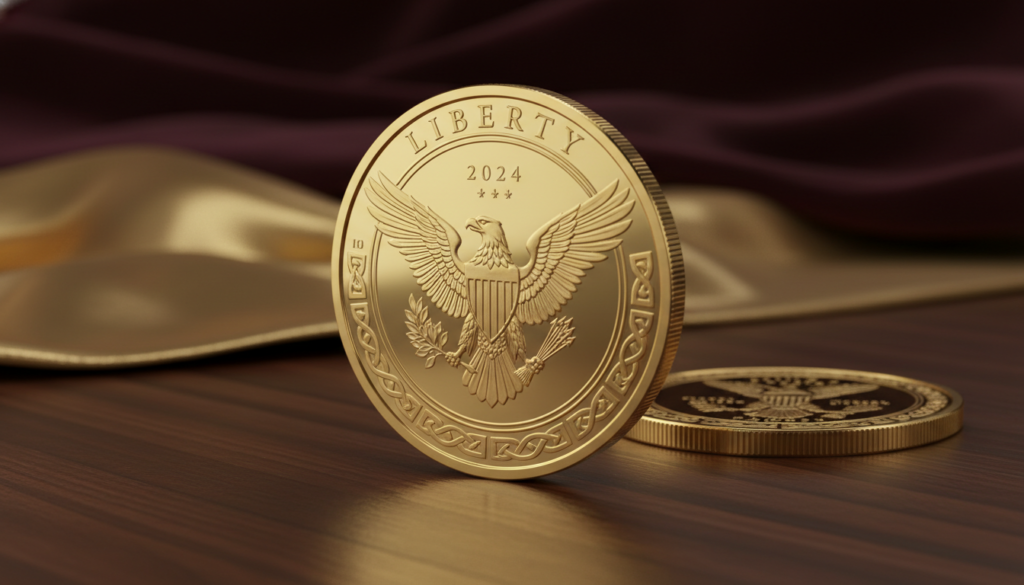
American Eagle Gold Proof coins: rules and pitfalls
The American Eagle gold proof is accepted when shipped ungraded in its original mint box with the COA included.
Any third-party grading slab, missing certificate, or incomplete box can trigger a refusal by the custodian.
Why graded or certified proof pieces may be disqualified
Graded coins are often treated as collectible items and may fail custody standards.
If a product is marketed as a collectible or has been slabbed, ask the dealer and custodian before purchase.
- Compliance checklist: Is it ungraded? Does it come with the original box and COA? Has the dealer confirmed the item is allowed by your custodian?
- Consider premiums: proof presentation often costs more. Higher premiums can reduce long-term investment gains compared with common bullion.
Decision tip: Choose proof when presentation, limited mintage, or aesthetic value matters to you. Choose bullion for lower friction, lower premiums, and simpler custody.
IRA-Approved Gold Bars and Rounds (Credit Suisse, Royal Canadian Mint, Perth Mint)
Well-hallmarked bars and branded rounds give custodians the proof they need to accept shipments. Investors favor these pieces for lower premiums per ounce and efficient storage when building a metal allocation.
Top private refiners include Credit Suisse, PAMP Suisse, Valcambi, Asahi, and Johnson Matthey. These refiner names carry recognized assay marks and help speed custody checks.
Government-minted bars from the Royal Canadian Mint and the Perth Mint also trade easily. A Canadian mint bar or Perth Mint product often reduces buyer doubt and resale spreads.
Weight rules matter. Common investor sizes run from 1 oz up to 100 oz for retail. Institutional bars reach 400 oz, but larger bars can lower liquidity and widen spreads.
Check purity and accreditation: bars must meet minimum fineness and come from an approved refiner or national mint. Seal integrity, paperwork, and chain-of-custody are critical for acceptance.
| Type | Typical purity | Why buyers choose it |
|---|---|---|
| Credit Suisse / PAMP | .999+ | Low spreads, strong refiner marks |
| Royal Canadian Mint | .9999 | Government trust signal, easy resale |
| Perth Mint | .9999 | Recognizable mint bars, good liquidity |
| Large institutional bars | .995–.999 | Lower cost per oz, reduced liquidity |
Gold Coin Sizes and Buying Considerations for IRA Accounts
Size choices shape how you store, sell, and use physical metal inside a retirement account.
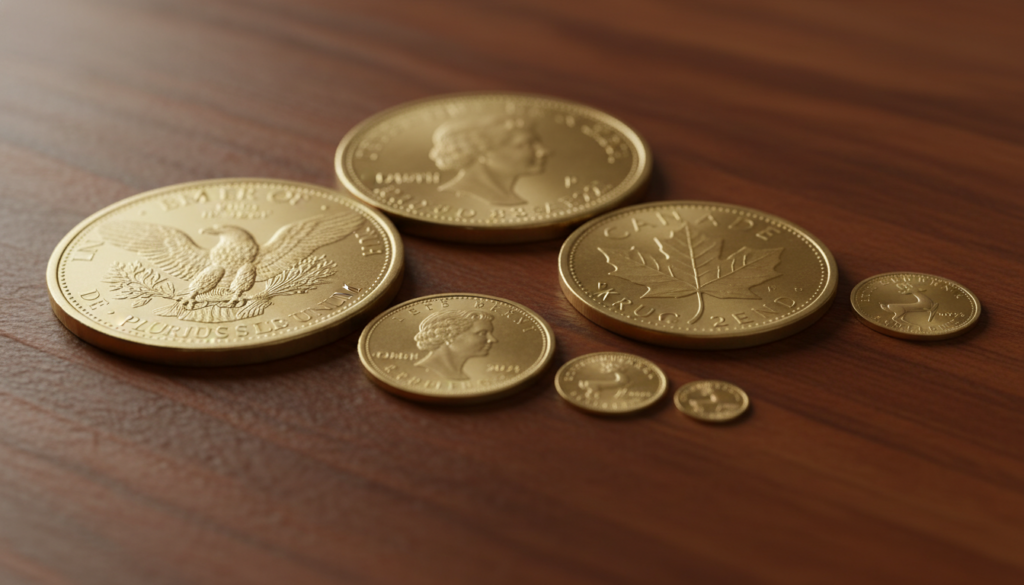
Common weights include 1/10 oz, 1/4 oz, 1/2 oz, and 1 oz. Fractional pieces give flexibility for partial distributions. They make it easier to sell smaller amounts over time.
Smaller pieces usually carry higher premiums per ounce. One-ounce items and well-marked bars often deliver the lowest cost per ounce. That tradeoff matters for long-term investment math.
Liquidity favors widely recognized bullion and mint-struck items. U.S. market buyers prefer familiar types because they trust purity and hallmarking. That trust speeds resale and reduces spreads.
Coins vs. bars: coins are more recognizable at resale. Bars are more storage-efficient and can lower per-ounce fees. Both must meet custody purity and condition rules to avoid acceptance problems.
Quick decision framework:
- If you value flexibility, pick fractional pieces.
- If you want lower premiums, favor 1 oz units or reputable bars.
- Match choices to long-term holding plans and planned rebalancing.
Get a Free Precious Metals IRA Kit from Noble Gold
Looking to diversify with physical gold and silver? Noble Gold Investments offers trusted service and competitive bullion options for your retirement.
Claim Your Free Kit| Choice | Typical benefit | Tradeoff |
|---|---|---|
| 1/10, 1/4 oz | High flexibility for small redemptions | Higher premium per oz |
| 1/2, 1 oz | Better cost per oz, easy resale | Less granular for small distributions |
| Bars (1 oz–400 oz) | Storage efficient, low premium | Large bars can reduce liquidity |
Gold Coins That Are Not IRA Eligible (and What to Avoid)
A fast way to derail a retirement metal purchase is to buy items marketed for rarity or grading rather than purity and hallmarking.
Common ineligible examples
Pre-1933 U.S. coin issues are usually treated as collectibles and rejected for custody.
The South African Krugerrand is another common surprise; popularity does not equal acceptance.
Why graded or certified pieces cause problems
Third‑party slabs often push an item into the collectible category.
Even if the metal content is fine, graded or marketed rare coins can be disallowed by custodians.
“If the seller emphasizes rarity or grading, pause and verify purity, provenance, and paperwork.”
Britannia cutoff and practical tips
Note: Britannia gold and silver struck before 2013 do not meet many custody rules. Always check the year and specs.
Avoidance checklist — quick questions before you buy:
- Is the year and fineness listed clearly?
- Does the product ship in the original box and paperwork?
- Is emphasis on rarity rather than mint credentials or bullion content?
| Item | Common problem | Action |
|---|---|---|
| Pre-1933 U.S. coins | Classified as collectible | Avoid for retirement accounts |
| South African Krugerrand | Not accepted by many custodians | Verify before purchase |
| Graded/certified pieces | May trigger collectible status | Buy ungraded with mint paperwork |
| Britannia (pre-2013) | Fails cutoff rules | Confirm year and fineness |
Our Top Company Pick for 2026

Minimum Investment with Augusta Precious Metals is $50,000.
See Our Full 2026 Company ComparisonConclusion
A smart finish to any purchase is a quick compliance check — purity, provenance, and packaging matter most.
Core takeaway: eligibility depends on IRS standards for fineness, product type, condition, and recognized mints or refiners — not marketing or trends.
Safe picks are widely recognized sovereign bullion and well‑hallmarked bars. Proof pieces can qualify, but only with original packaging and certificates.
Before you buy, run a short checklist: confirm fineness, verify the mint and year, avoid graded collectibles, and keep original paperwork intact.
Remember to coordinate dealer-to-custodian shipping. A self-directed account needs an approved custodian and secure storage to complete the transaction smoothly.
Next step: choose recognizable products that match your budget and liquidity needs, and review any remaining questions with your custodian or dealer before purchase.