
Affiliate disclosure: purchases made throught the link may pay the affiliate a commision at no extra cost to you. Thanks for helping keeping the site running. Informational in nature only, not financial advice.
Surprising fact: industrial demand uses more than half of annual global silver supply, which can swing price and value in unexpected ways.
This short guide explains what “silver investing for beginners” actually means: getting exposure to metal prices by owning coins, bars, or using products that track the market.
Silver can be volatile and often moves on industrial trends, not just stock markets. That makes it a unique place in a portfolio and a potential hedge to diversify wealth.
Our Top Company Pick for 2026

Minimum Investment with Augusta Precious Metals is $50,000.
See Our Full 2026 Company ComparisonThis guide will cover why people buy this precious metal, how spot price differs from what you pay, main ways to invest, and common mistakes to avoid.
There is no single right route: choose between hands-on ownership, simple paper options, or liquidity based on goals and risk tolerance.
This article is informational, not personal advice. Consider your timeline and comfort with swings in price. See our list of the best precious metals companies now: https://givemethegold.com/best-precious-metals-companies-of-2026/
Key Takeaways
- Industrial use can drive demand and price separately from stocks.
- Exposure means owning metal or using financial products that track it.
- Expect volatility; match choices to your goals and timeline.
- Understand spot price versus retail premiums before buying.
- No one-size-fits-all approach—consider ownership, simplicity, or liquidity.
Why investors buy silver as a precious metals investment today
Many buyers prize this metal because it wears two hats: a store of value and a key industrial input. That dual identity creates different reasons to hold it in a portfolio.
Silver’s dual role as a monetary metal and an industrial metal
Monetary side: Some treat it like a hedge against currency weakness and inflation. It can act as a tangible asset when paper markets wobble.
Industrial side: Electronics, solar panels, and medical uses create steady fabrication demand. This real demand can push prices separately from financial markets.
How supply and demand can move the market differently than stocks
Mine output, recycling flows, manufacturing orders, and investment buying all tug on price. When factories need more metal, demand rises even if stocks fall. Conversely, broad sell-offs can drag metal down with other risk assets.
Silver vs. gold: similarities, differences, and when each may fit
Gold often functions more like a pure monetary hedge. This metal tends to be more volatile because of its industrial side. U.S. investors cite diversification, inflation concerns, and crisis hedging as common reasons to add a small allocation.


| Attribute | This metal | Gold | When to consider |
|---|---|---|---|
| Main drivers | Industrial demand & investment | Monetary demand & safe-haven demand | Diversify or add industrial exposure |
| Volatility | Higher | Lower | Shorter vs. long horizon |
| Typical role | Hybrid asset | Pure hedge | Match to portfolio goals |
How silver prices work in the real world
Real-world bullion prices rarely match the quoted market number you see on financial screens. The spot price is a live reference that traders use. It reflects the base metal value at a moment in time.
Spot price vs. the price you pay
The spot price is the baseline. Dealers add premiums, markups, and spreads to cover fabrication, shipping, and handling.
Buy/sell quotes differ: the dealer’s buy price is usually lower than the sell price. That spread matters if you plan to trade soon.
What drives price silver moves
Demand from industry and investor flows can push prices fast. Changes in inflation expectations, interest rates, and dollar strength also move markets.
Supply shocks, mine outages, or recycling swings add pressure. Headlines can trigger quick shifts, so a long-term mindset beats trying to time every move.
| Factor | Effect on price | Notes |
|---|---|---|
| Spot | Baseline | Used to price bullion products |
| Premiums | Increase retail cost | Higher on government coins, lower on generic bars |
| Market sentiment | Volatile | News and macro data spark moves |
Quick tip: compare total costs — metal + premium + shipping + taxes — before you buy. Understanding pricing mechanics reduces regret when volatility hits.
Silver investing for beginners: the main ways to invest silver
Bearing in mind goals and risk, there are four main routes to gain exposure to this metal: physical ownership, paper funds, company shares, and derivatives.

Our Top Company Pick for 2026

Minimum Investment with Augusta Precious Metals is $50,000.
See Our Full 2026 Company ComparisonPhysical bullion: bars, rounds, and government coins
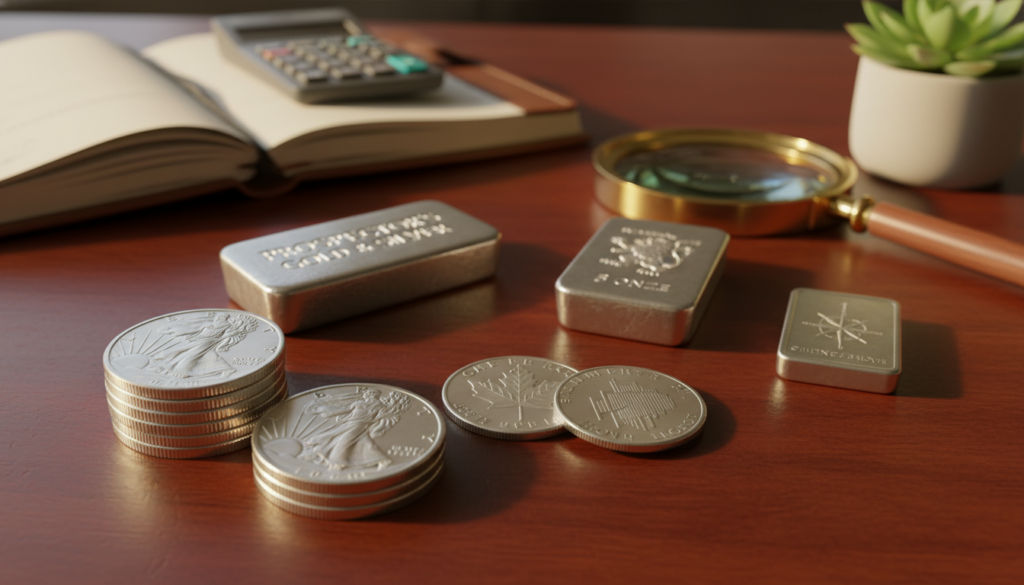
Bars are bulk and usually lower premium per ounce. Rounds are minted by private firms and trade easily. Government coins are widely recognized and often easier to sell.
Liquidity and recognizability matter to new buyers. Smaller pieces sell faster but cost more per ounce.
ETFs and mutual funds
Paper funds let you gain exposure without storage. They trade in a brokerage account and can sometimes be held in an IRA, offering tax-advantaged placement depending on rules.
Mining stocks
Buying miner shares ties returns to both metal moves and company performance. That can amplify gains but also adds operational, geopolitical, and management risk.
Futures and options
Derivatives use leverage. That can magnify gains and losses and may lead to losses larger than your initial margin. This route suits experienced traders only.
- Who each way fits: physical for hands-on holders; ETFs for convenience; miners for equity risk-takers; derivatives for seasoned traders.
- Best way? It depends on whether you value simplicity, control, cost, or flexibility.
Buying physical silver in the United States without common newbie mistakes
Before you click “buy,” make sure you understand pricing, storage, and the seller’s reputation. A short checklist keeps purchases practical and safe.
Choosing reputable dealers and brokerage services to reduce scam risk
Vet sellers: check clear pricing, return policies, and online reviews. Use the National Futures Association BASIC search when a dealer or broker advertises futures links.
Look for firms that disclose fees and offer straightforward customer service. Some brokerage services will sell metal and either ship it or store it for a fee.
Comparing quotes and understanding buy/sell pricing
Get multiple quotes. Compare the all-in cost per ounce — metal price plus premiums, shipping, and taxes.
Also note the buy/sell spread so you know liquidity costs if you need to sell soon.
Top Precious Metals Companies of 2026
A streamlined side-by-side snapshot to help you compare leading precious metals providers for physical metals and IRA rollovers.
Note: Minimums/fees can vary by account type and promotions. Always confirm details directly with the provider.
Storage, insurance, and security planning
| Option | Pros | Cons |
|---|---|---|
| Home safe | Control, immediate access | Theft risk, insurance needed |
| Bank box | Stronger physical security | Limited access hours |
| Third-party vault | Insured, scalable | Fees, less physical hand control |
Security basics: keep receipts and serials, limit who knows you own coins or bars, and include insurance costs in your investment math. These steps reduce value loss and other risk.
How to build silver into an investment portfolio
Adding a small allocation of physical metal or funds can change how your portfolio reacts to shocks. This is about lowering correlation, not chasing quick wins.

Using metal to diversify portfolio risk away from traditional assets
Diversification means you avoid having all holdings move the same way. In real life that means spreading across asset types so a single event does not hit everything.
Silver can act as a diversifier away from stocks and bonds because it ties to different economic drivers. It can be volatile and is not a guaranteed hedge, so treat it as risk management rather than a certainty.
Picking an allocation that matches goals, time horizon, and comfort with volatility
Start small: define the purpose—crisis hedge, inflation cover, or commodity exposure—then set an allocation and stick to it. Rebalance periodically instead of chasing spikes.
Short-term cash needs usually do not pair well with volatile metal. Long-term holders may tolerate swings if the allocation aligns with their goals and overall investment portfolio.
- Compare roles: gold often leans monetary; silver adds industrial sensitivity.
- Watch total exposure across ETFs, miners, and physical assets so you don’t double-count.
- Consider currency confidence and store of wealth motives, but emphasize risk limits and comfort with drawdowns.
How to choose precious metals companies and services for buying and holding
A smart buyer focuses on clear pricing, dependable delivery, and straightforward storage options. These three areas reveal how trustworthy a firm is and how much friction your purchase will add to an investment plan.
What to look for in pricing transparency, delivery, and storage options
Pricing transparency means posted spot references, a visible premium, and no surprise fees at checkout. Look for real-time updates and a line-item breakdown: metal + premium + shipping + tax.
Delivery expectations for U.S. buyers should include shipping timelines, signature requirements, discreet packaging, and insurer details in case of loss or delay.
Trump & Elon Reunite for Secret Silver Pact
Whispers are coming out of Mar-a-Lago and Silicon Valley…
Trump and Elon Musk may not agree on everything. But insiders say behind closed doors, they’re betting on the same thing:
Silver.
And the numbers explain why:
- Silver is now up more than 150% this past year, blasting through a new all-time high of $84.50 an ounce.
- Musk’s empire — Tesla, SpaceX, SolarCity — is devouring silver for EVs, satellites, and solar panels.
- Trump’s deregulation agenda could unleash even more domestic demand.
That’s why we created this brand new Silver Wealth Guide — your roadmap to what Trump, Musk, and the elites already see coming.

Storage choices often include home delivery or third-party vaulting. Ask: where is the metal held, who insures it, and what fees apply to access or withdrawal?
Regulation and risk disclosures: what bullion investors should understand before buying
Note: physical bullion is not the same as bank cash. Protections for regulated financial products may not apply. Read the firm’s risk statement and buyback policy.
| Checklist item | What to expect | Why it matters | Red flag |
|---|---|---|---|
| Posted pricing | Spot + clear premium | Compare all-in price per ounce | Hidden fees at checkout |
| Buyback policy | Verifiable rate and process | Ease of exit and liquidity | Vague or no buyback terms |
| Delivery & insurance | Tracking, signature, insured | Protects value during transit | No insurance or poor tracking |
| Storage options | Home, bank vault, or insured third-party | Balance control vs. cost | Opaque vault locations or insurers |
Quick tip: many “deals” reduce the premium portion, not the underlying metal price. Always compare total cost per ounce across dealers and services.
See our list of the best precious metals companies now
Conclusion
Adding exposure to this market can help diversify wealth, yet it requires knowing what drives price day to day.
Bottom line: this metal can play a role in building long-term value, but demand and market shifts can move it quickly. Remember that the spot level is only a reference; the price you pay includes premiums and dealer spreads that change real returns.
Choose one clear way—physical coins and bars, ETFs or funds, mining stocks, or options/futures—that fits your comfort and timeline. Start small, focus on dealer quality, and verify buy/sell terms and storage options.
Treat precious metals as part of a diversified plan. Do more due diligence, compare sellers, and prioritize process over headlines to protect wealth and limit risk.