

Surprising fact: the IRS accepts only a narrow list of bullion items for retirement accounts — many online listings that claim “IRA eligible” still fail final approval.
This short guide aims to help U.S. buyers spot approved bullion and avoid costly mistakes. It explains product rules, minimum fineness, and approved producers so you can decide with confidence.
Key point: eligibility hinges on item type (coin, bar, round), purity thresholds, and the maker’s accreditation — not on vague labels like “pure” or “collector.”
The four permitted metals are gold, silver, platinum, and palladium. Each has a minimum fineness and must come from a national mint or an accredited refiner or assayer.
We also cover common pitfalls — graded coins, specialty issues, collectibles, and storage rules that can trigger tax trouble — and offer checklists and examples for easy comparison.
Key Takeaways
- IRS rules limit which bullion you can hold inside an IRA; details matter.
- Approved items must meet fineness standards and come from trusted producers.
- Gold, silver, platinum, and palladium are the permitted categories.
- “IRA eligible” tags online are a starting point — always verify purity and producer accreditation.
- The guide includes checklists and examples to help you compare options confidently.

How a Precious Metals IRA Works in the United States
A clear view of process and roles helps you buy confidently.
“Gold IRA” and related terms describe self-directed retirement accounts that hold physical gold, silver, platinum, or palladium rather than only stocks or bonds. This is not a separate IRS account type; it is a structure of a self-directed ira that lets the ira account hold bullion alongside conventional investments.
The transaction flow is simple. The ira account keeps funds. A custodian administers paperwork and wires cash. A dealer or sponsor supplies pricing and inventory. The purchased items are shipped to an approved third-party depository for storage.
Why the IRS limits acceptable product types
The IRS focuses on specific bullion coins, bars, and rounds that meet fineness rules and come from trusted producers. Condition, purity, and producer accreditation matter more than marketing labels when determining eligibility.
“Custodians ensure the IRS rules are followed and that holdings stay in qualified storage.”
Buyers typically choose eligible products, sign purchase-direction forms, and the custodian completes payment. You can sell inside the account or take distributions when eligible, sometimes as in-kind delivery.
| Role | What it does | Why it matters |
|---|---|---|
| Custodian | Holds the ira account, completes transactions | Ensures compliance and paperwork |
| Dealer/Sponsor | Provides inventory and pricing | Sources eligible items and markets |
| Depository | Stores physical holdings for the account | Required third-party storage by IRS rules |
Next: eligibility hinges on IRS standards for purity, producer, and packaging — not product labels. That topic follows in the next section.
IRS Eligibility Rules That Determine What You Can Buy
IRS rules set clear thresholds that decide whether a bullion item can sit inside your retirement account. These rules focus on purity, producer credentials, and condition. Follow them to avoid surprises when funding or transferring funds for a purchase.
Minimum fineness requirements by metal
Core rule: the metal must meet minimum fineness requirements to qualify.
- Gold: commonly .995 (American Eagle has a special exception).
- Silver: typically .999.
- Platinum and palladium: often .9995.
Who must produce it
Eligible pieces usually come from a national government mint or from an accredited refiner, assayer, or manufacturer recognized by major exchanges and industry bodies (LBMA, COMEX, etc.).

Always check the product listing for the manufacturer or refiner name and confirm the item is marketed as bullion, not a collectible.
Condition and packaging rules
Bullion coins should be brilliant uncirculated and free of damage. Poor condition can disqualify an otherwise eligible item.
Proof coins need original packaging and a certificate of authenticity. Graded proofs often trigger collector treatment, so verify eligibility with your custodian or dealer before you fund a purchase.
“Have the custodian confirm the exact SKU or product ID to ensure it will meet IRS requirements.”
what metals are allowed in a precious metals IRA
Quick answer: self-directed retirement accounts may hold four core bullion types when they meet IRS standards for purity and producer accreditation.
The four IRA-permitted metals:
- Gold — common fineness .995 (American Eagle coins remain an IRS exception).
- Silver — typical fineness .999.
- Platinum — common fineness .9995.
- Palladium — common fineness .9995.
Top Precious Metals Companies of 2026
A streamlined side-by-side snapshot to help you compare leading precious metals providers for physical metals and IRA rollovers.
Note: Minimums/fees can vary by account type and promotions. Always confirm details directly with the provider.
Quick purity thresholds to confirm before you buy
Use this screenshot-friendly cheat sheet when evaluating listings: gold .995 (American Eagle exception), silver .999, platinum .9995, palladium .9995.
If a product listing omits fineness or shows a lower number, pause and verify before funding the purchase. Remember, bullion coins, bars, and rounds are the items that usually qualify — not numismatic or graded collector pieces.
Finally, purity alone won’t guarantee acceptance. The producer, hallmark, and product type must meet IRA rules. Confirm eligibility with your custodian for any special-edition or limited-series release before you complete the transaction.
Gold in an IRA: Coins and Bars That Typically Qualify
When adding gold to your retirement portfolio, focus on purity levels and recognized issuers.
Minimum standards and the American Eagle exception
Minimum fineness: most acceptable gold meets .995. The American Eagle is a common IRS exception despite differing purity. Verify item specs before funding a purchase.
Typical qualifying bullion coins
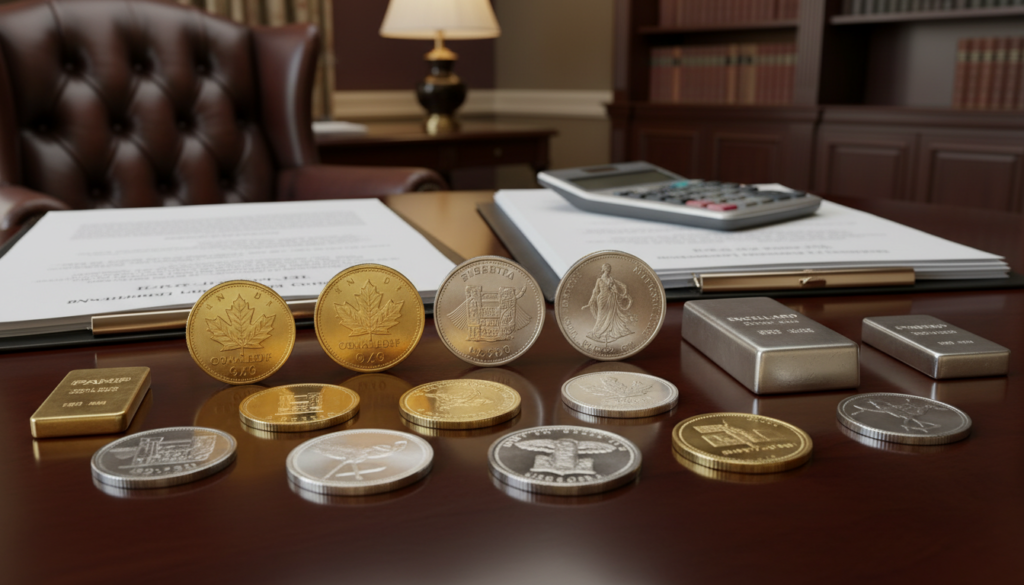
Widely accepted bullion coins include the American Buffalo, Canadian Maple Leaf, Austrian Philharmonic, and Australian Kangaroo/Nugget. These pieces are sovereign-minted, liquid, and clearly bullion coins rather than collectible issues.
Bars, rounds, and recognized refiners
Buyers often choose bars and rounds from top refiners to ease verification.
- Common producers: Perth Mint, PAMP Suisse, Valcambi, RCM, Credit Suisse, Asahi, Johnson Matthey.
- Check for stamped fineness, weight, hallmarks, and serial numbers on larger bullion bars.
Proof coin cautions
Proof coins may qualify when ungraded, in original mint packaging, and with the COA. Slabbed or graded proofs often trigger collector status and higher premiums.
“Confirm the exact SKU with your custodian or dealer to avoid eligibility surprises.”
| Type | Typical hallmark | Why buyers pick it |
|---|---|---|
| Bullion coins | Mint mark, year, fineness | High liquidity; sovereign backing |
| Bullion bars | Refiner hallmark, weight, fineness, serial | Lower premiums per ounce; clear refiner ID |
| Proof coins | Original packaging, COA | Higher premium; may be eligible if ungraded |

Silver in an IRA: Bullion Coins, Bars, and Rounds
Silver holds appeal for retirement savers because it lets you add physical ounces at lower cost per unit.
Minimum fineness matters: the non-negotiable standard for most accounts is .999. Confirm this stamp before you fund any purchase.
Popular IRA-approved coins include the American Eagle, Canadian Maple Leaf, Austrian Philharmonic, Australian Kookaburra, and America the Beautiful. These pieces are widely traded and easy to verify.
Recognizable refiners ease acceptance for bullion bars and rounds. Common names include Sunshine, Engelhard, Johnson Matthey, Nadir, Valcambi, PAMP Suisse, RCM, and Perth Mint.
Buying like a pro
- Confirm the fineness stamp (.999) and weight (1 oz typical; retail up to 100 oz).
- Check for a clear refiner hallmark or mint name for resale and eligibility.
- Prefer standard bullion bars, coins, or rounds over novelty releases to avoid surprises.
“Confirm the exact SKU and refiner with your custodian before you fund a purchase.”
| Type | Typical size | Why buyers choose it |
|---|---|---|
| Coins | 1 oz common | High liquidity; sovereign backing |
| Bars | 1–100 oz retail | Lower premium per ounce; recognizable refiner ID |
| Rounds | 1 oz typical | Lower cost; good for stacking small holdings |
Storage note: silver requires more space than gold for equal value. That affects depository logistics and shipping costs, so plan accordingly.
Platinum and Palladium: IRA-Approved Options and Purity Standards
These two white metals require tighter purity checks and clearer provenance than many other bullion options.
Shared purity standard: platinum and palladium typically must meet minimum fineness of .9995. Always confirm that stamp on the product spec line before you fund a purchase.

Common coin and bar choices
Recognizable sovereign coins ease acceptance. Examples seen for retirement accounts include the American Eagle and Canadian Maple Leaf, and for platinum the Australian Koala.
Buyers also pick bars from top refiners to simplify verification. Look for PAMP Suisse, Valcambi, Credit Suisse, and Argor-Heraeus when choosing bars.
“Verify metal, fineness, weight, and hallmark — then confirm the producer is accredited.”
| Product | Typical fineness | Why chosen |
|---|---|---|
| Coins (American Eagle, Maple Leaf, Koala) | .9995 (confirm listing) | Sovereign backing; high trust |
| Refiner bars (PAMP, Valcambi, Credit Suisse) | .9995 | Lower spreads; clear hallmarks |
| Market note | N/A | Thinner liquidity vs. gold; expect wider spreads |
Quick spot-check: verify metal name, fineness, weight, and the refiner hallmark. Then ask your custodian to confirm eligibility.
Reality check: platinum and palladium diversify holdings, but market depth and dealer spreads can vary. Match allocations to your timeline and risk tolerance.
Product Types and Specs Buyers Should Check Before Purchasing
Before you click buy, check the product type and specs—small differences can change eligibility.
Basic options: bullion coins (sovereign-minted), rounds (private mint pieces), bullion bars (rectangular ingots), and certain proof coins when ungraded and in original packaging.
Product type matters because the same metal may be treated as bullion or a collectible. That classification affects custodian acceptance and tax treatment.
Weights and common sizes
Common coin and round sizes: 1/10 oz, 1/4 oz, 1/2 oz, and 1 oz — these trade easily in the market.
Bars range widely. Retail buyers often prefer small bars for flexibility; institutional sizes can be hundreds of ounces.
Hallmarks, accreditation, and what to check
Look for refiner or mint name, stated fineness, weight, and a serial number on larger bars. Accredited producers and assayers aligned with LBMA/LME/COMEX standards ease verification.
Special series caution: themed or limited runs may carry collectible premiums and fail requirements. Ask the custodian for written confirmation that the exact SKU is eligible before funding.
| Product Type | Common Sizes | Key Markings |
|---|---|---|
| Coins | 1/10, 1/4, 1/2, 1 oz | Mint name, year, fineness |
| Rounds | 1 oz typical | Refiner mark, fineness |
| Bars | 1–400+ oz (varies by metal) | Refiner, weight, purity, serial |
Metals and Coins Not Allowed in a Precious Metals IRA
Not every historic coin fits an IRA’s strict bullion criteria, despite containing gold or silver.
Why collectible, rare, graded, or certified coins are generally ineligible
An IRA must hold qualifying bullion, not collectibles. Graded or slabbed pieces often carry numismatic value that puts them outside those rules.
Grading and certification can trigger ineligibility because custodians treat slabbed items as collector property, which raises tax and compliance risk.

Examples buyers commonly ask about
- South African Krugerrand gold coins — often listed but flagged for collectible concerns.
- British Sovereign and historic Franc issues (French, Belgian, Swiss) — many are treated as numismatic.
- Some Britannia releases — check year and fineness before assuming eligibility.
- Proof coins — eligible only if ungraded, in original packaging, and with COA.
How to sanity-check eligibility before funding
Verify metal and fineness first. Confirm the product is bullion, not collectible. Check the producer or refiner accreditation. Then confirm condition, packaging, and COA.
“Keep written confirmation from your custodian that the exact SKU meets IRA requirements.”
| Step | Why | Action |
|---|---|---|
| Metal + fineness | Meets minimum purity | Check listing stamp |
| Product type | Bullion vs collectible | Ask dealer/custodian |
| Documentation | Compliance proof | Save invoices and written eligibility |
Buying Checklist: Storage Rules, RMD Planning, and Building a Portfolio
Before you buy, set clear rules for storage, funding, and exit strategies so your retirement plan stays compliant.
Storage first: IRA-owned bullion must sit with a qualified third-party depository. Home storage offers are a red flag and can create tax and compliance risk.
Funding routes: you can fund an ira account using new contributions (if eligible), transfers between custodians, or rollovers from employer plans. Use those funds to buy approved pieces through your custodian.
Liquidity planning: choose items widely traded in the U.S. market to ease selling or rebalancing if you need cash.
Distribution options: when eligible you may sell inside the account and take a cash distribution, or take an in-kind distribution and have bullion shipped to you. Required Minimum Distributions can affect timing and liquidity choices, so plan partial liquidations if needed.
Portfolio guidance
Balance core holdings with satellites. Many investors use gold and silver for core exposure, and add smaller allocations to platinum and palladium as tactical positions.
Allocation depends on your time horizon and volatility tolerance. Match precious allocations to the role those investments play in your broader retirement strategy.
| Checklist Item | Why it matters | Action |
|---|---|---|
| Storage | IRS requires third-party depository | Confirm depository name and fees |
| Funding method | Different rules for contributions, transfers, rollovers | Choose route and confirm custodian steps |
| Exit plan | Distribution type affects taxes and timing | Decide sell-for-cash vs. in-kind before purchase |
| Portfolio mix | Risk, liquidity, and market depth vary by metal | Set target allocations for gold, silver, platinum, palladium |
“Confirm eligibility, confirm storage, confirm fees/spreads, and confirm how you would exit (sell vs. distribute) before you buy.”
Get Your Free Silver Information Kit from GoldenCrest Metals Now
Take advantage of exclusive promotions and expert guidance. GoldenCrest Metals makes it easy to diversify your retirement with gold and silver.
Get Your Free Kit Now
Conclusion
, Key takeaway: a successful precious metals IRA pairs the right metals with IRS-eligible product formats and clear documentation.
Three checks to remember: confirm fineness requirements, verify the producer (national government mint or accredited refiner/assayer), and ensure the piece is the correct product type and condition. Favor simple, widely traded bullion coins, bars, or rounds to preserve liquidity and avoid surprises.
Be careful with graded or collectible pieces — they trigger many account issues. Storage matters: holdings must remain at a qualified third-party depository until an eligible distribution.
Next step: use the guide’s checklists, confirm the SKU with your custodian or dealer, and build an allocation that fits your retirement plan and timeline.